
Back to the illustration

Wildlife - Birds

Turtle Dove

The turtle dove is one of Britain's fastest-declining migrant birds, tied to seed-rich farmland, scrubby edges and quiet hedgerows.

Species description adapted from RSPB and BTO references - see links below.

Status: Red listed (critical decline)North Yorkshire species profileGo to Wildlife Identification
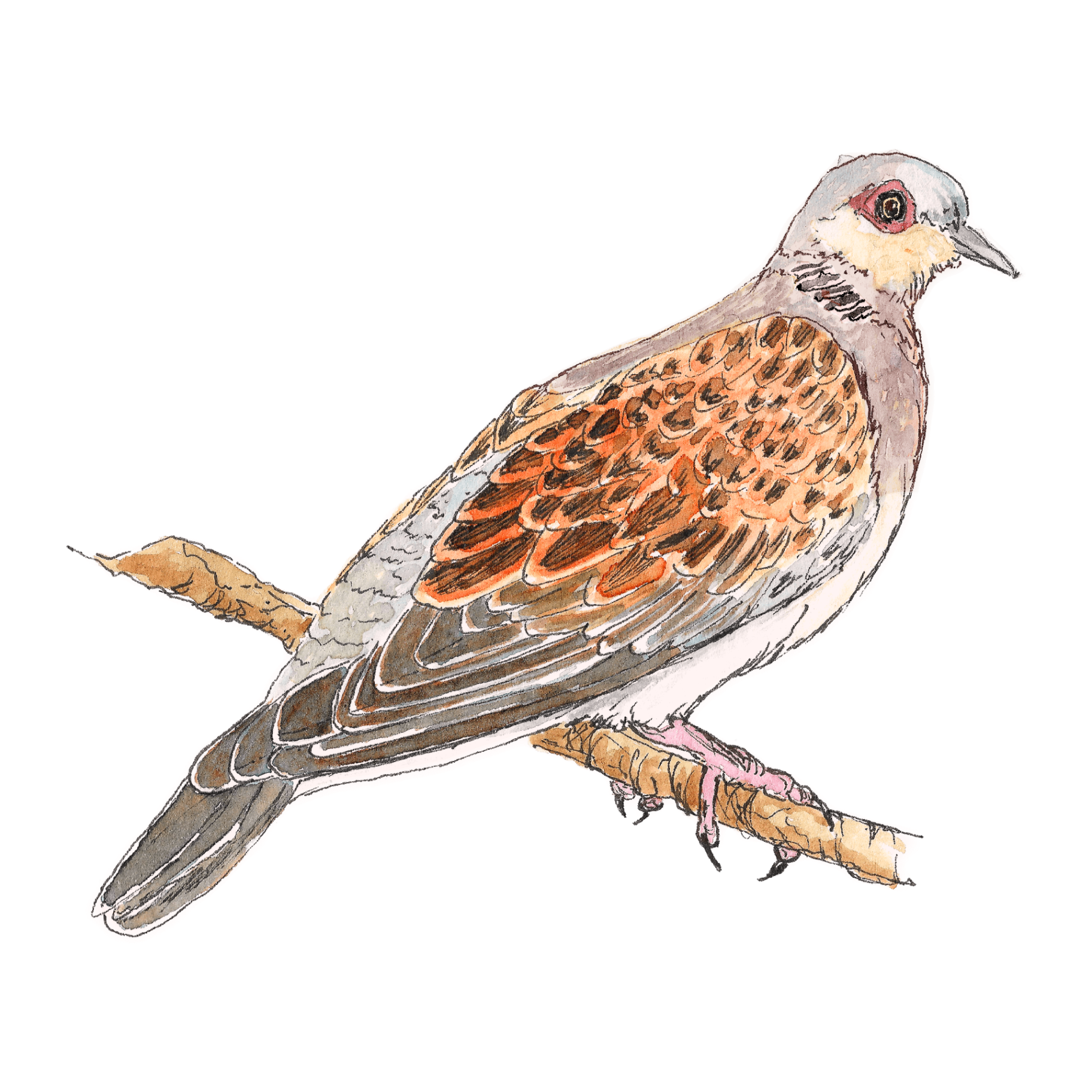
Watercolour illustration of a turtle dove perched on a branch
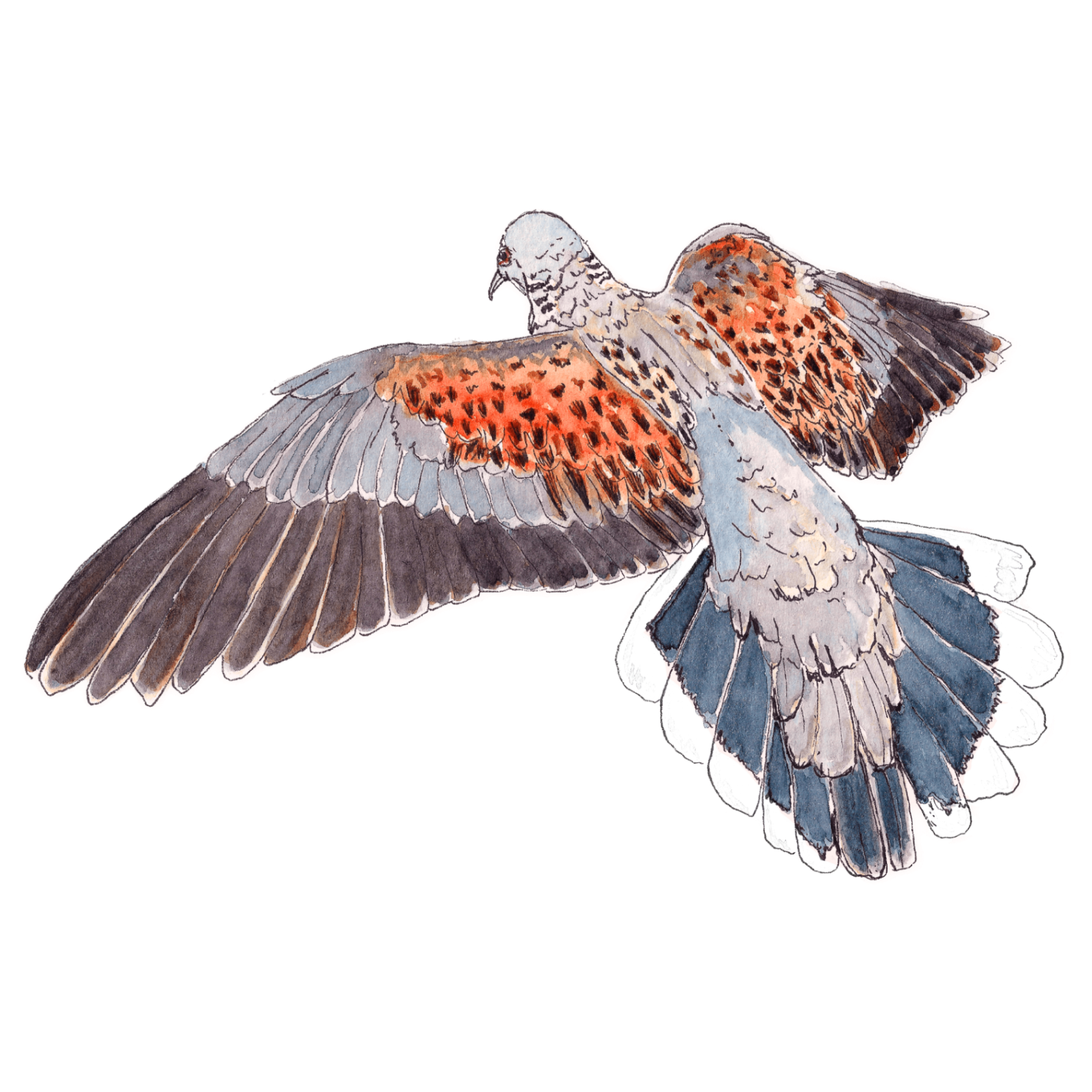
Watercolour illustration of a turtle dove landing with wings spread

Birds - Photo ID

Turtle Dove - photo identification

A small, delicately patterned migrant dove with orange scaled wings, a striped neck patch and a pinkish-red eye-ring - one of the UK's fastest-declining birds, whose soft purring was once the sound of an English summer.

Photographs by Rob - taken in and around the North York Moors.

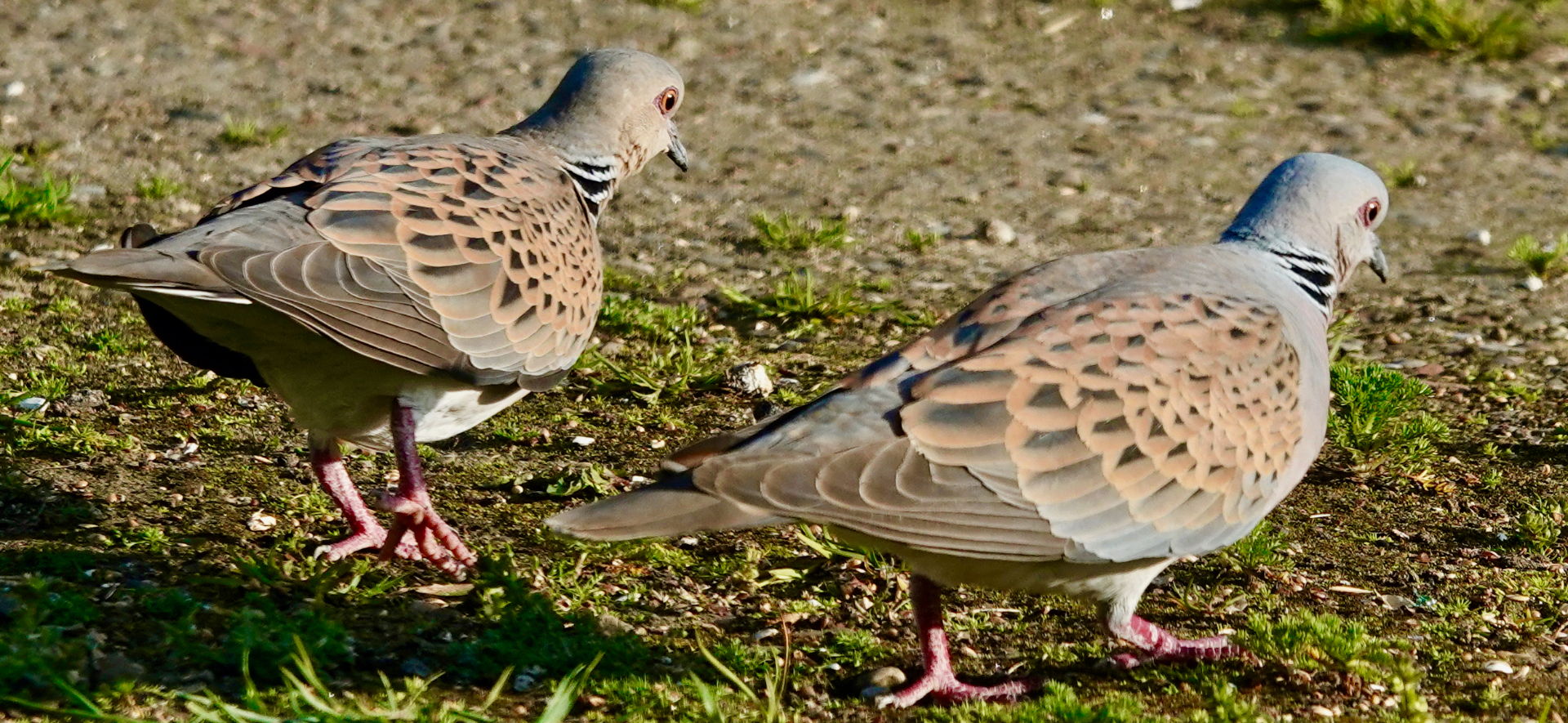
A pair of adult Turtle Doves feeding together on bare ground

A pair - a rare sight in the UK now

Two adult Turtle Doves together. Note the orange-and-black scaled wing pattern, the striped black-and-white neck patch, the blue-grey crown and the pinkish wash on the breast. Pairs like this were once a normal summer sight on farmland in southern and eastern England; today the UK breeding population has fallen so far that any sighting is worth reporting.

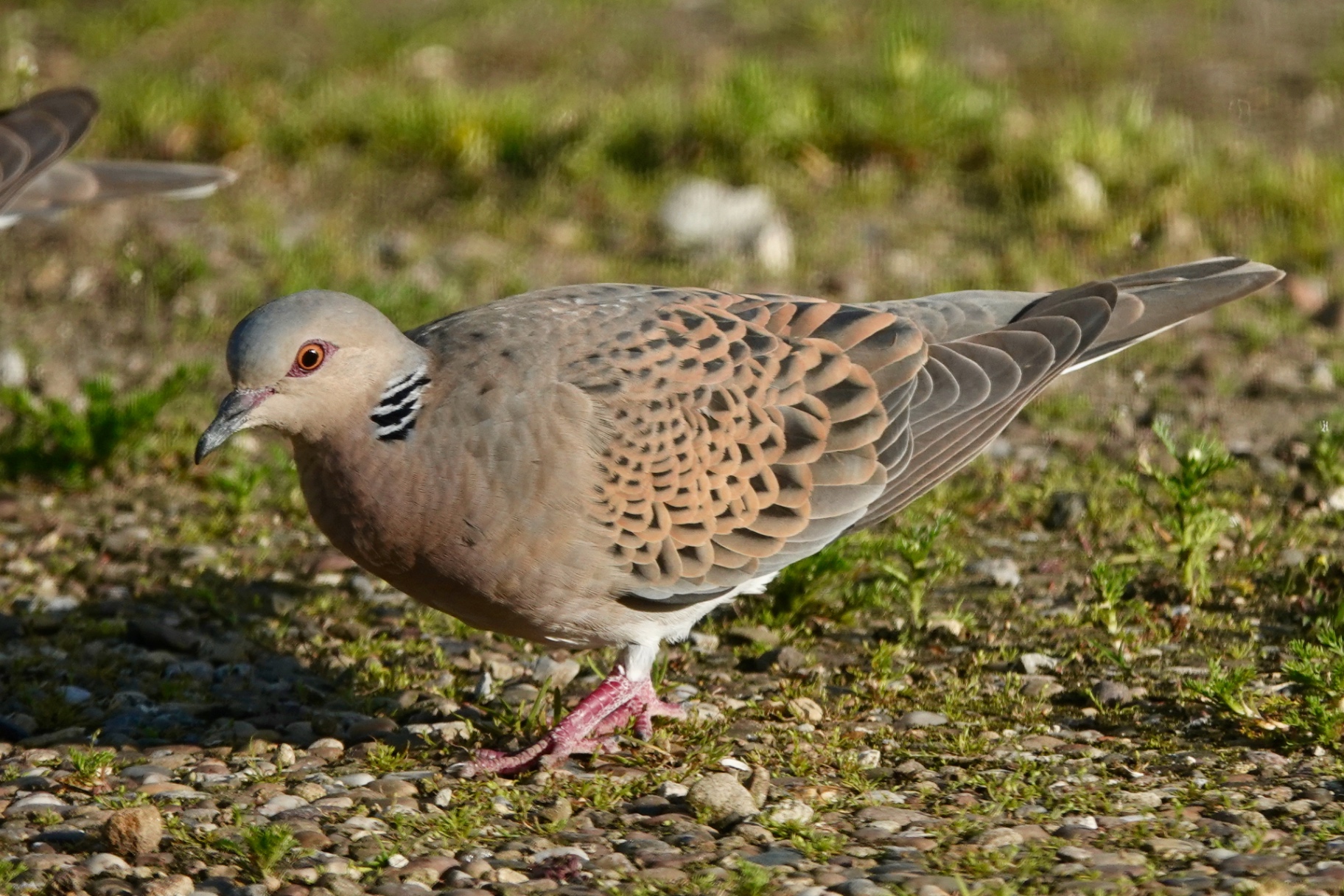
Adult Turtle Dove standing on gravel, side-on, showing scaled wings and pink eye-ring

Adult - the classic field marks

Everything that identifies a Turtle Dove is on show here: the bright pink-red eye-ring, the striped black-and-white neck patch, the rich orange-brown scaled wing feathers, the blue-grey head and the soft buff-pink breast. Bill is small and dark, legs are pinkish-red. About two-thirds the size of a Collared Dove and noticeably slimmer.

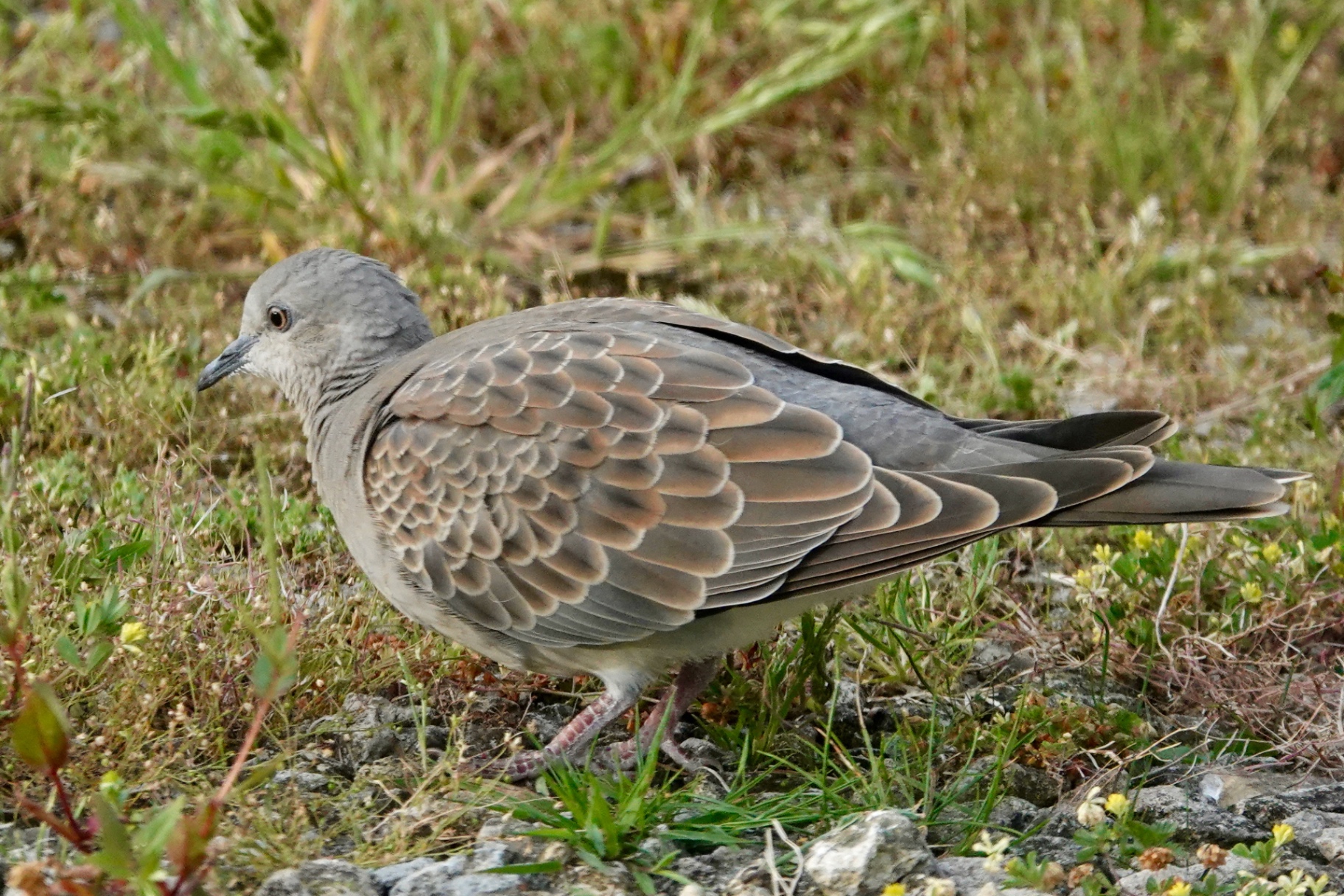
Juvenile Turtle Dove on stony ground, lacking the bold neck stripes of the adult

Juvenile - no neck stripes yet

A juvenile Turtle Dove. The scaled wing pattern is already developing, but the bold black-and-white neck patch and the bright eye-ring of the adult have not yet appeared, and the plumage looks softer and greyer overall. Juveniles in the UK are particularly precious - they are direct evidence that a pair has bred successfully here.

How it fits into North Yorkshire wildlife

The turtle dove represents the kind of hedgerow-rich, seed-rich countryside that has become much rarer across England, including North Yorkshire.

How it interacts with the wider landscape

It depends on a delicate mix of scrub, nesting cover, open ground and seed-bearing plants, so habitat simplification hits it hard.

Seasonal rhythm

It arrives from Africa in late spring and needs a short breeding window with food and cover already in place.

Where to look and what to notice

Look for warm brown scaling on the wings, a soft pink breast and quiet perching spots along hedgerows and scrubby edges.