
Back to the illustration

Wildlife - Birds

Treecreeper

The Treecreeper is a tiny woodland specialist that behaves like a wind-up mouse on tree trunks. Mottled brown above and silky white below, it blends perfectly into bark, then spirals upwards probing every crevice with its long downcurved bill for spiders, insect eggs and overwintering grubs. When it reaches the top of a trunk it flies down to the base of the next tree and starts again.

Species description adapted from RSPB and BTO references - see links below.

North Yorkshire species profileGo to Wildlife Identification
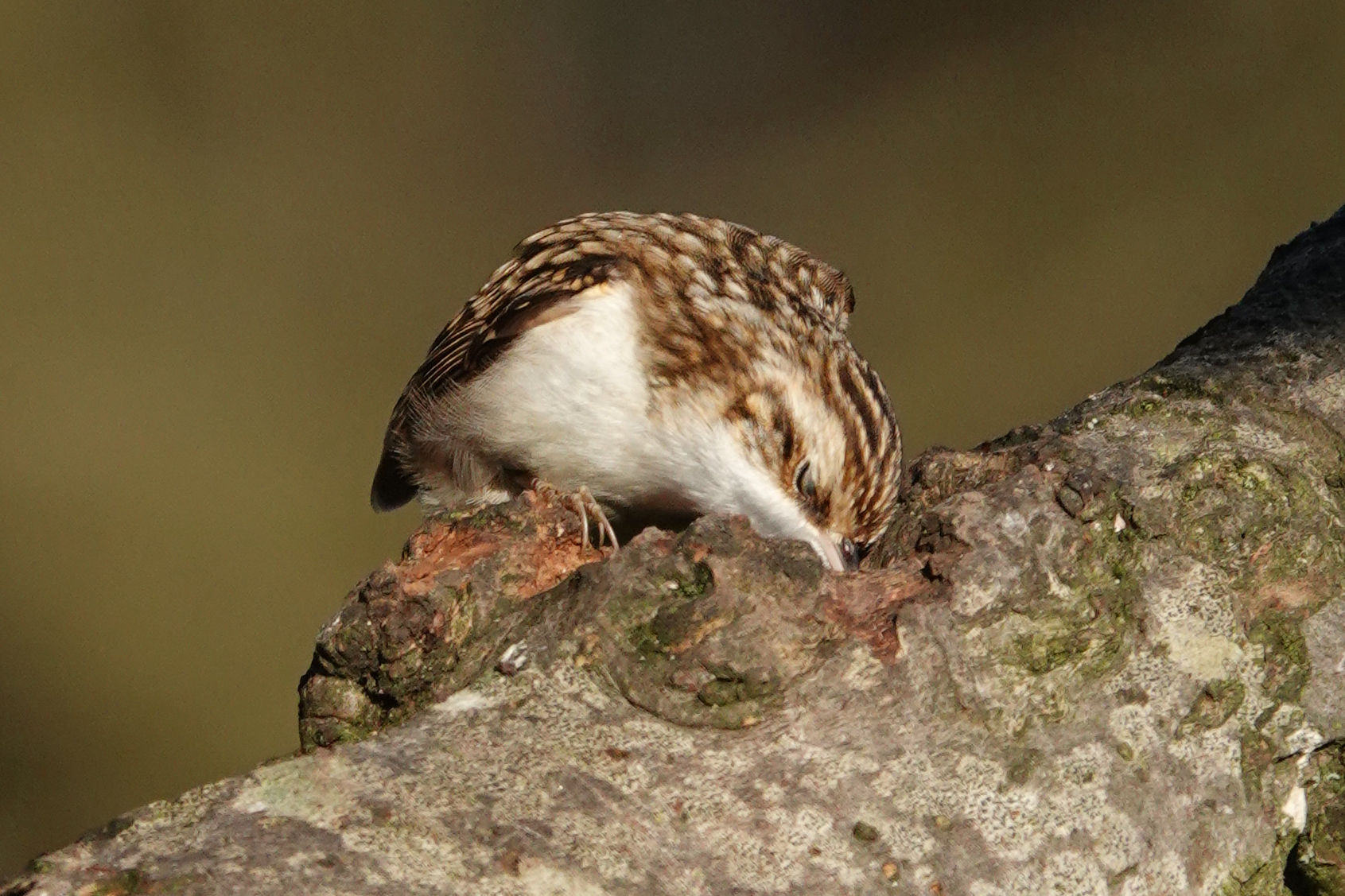
A Treecreeper probing deep into a fissure on a lichen-covered branch

Birds - Photo ID

Treecreeper - photo identification

The Treecreeper is a tiny woodland specialist that behaves like a wind-up mouse on tree trunks. Mottled brown above and silky white below, it blends perfectly into bark, then spirals upwards probing every crevice with its long downcurved bill for spiders, insect eggs and overwintering grubs. When it reaches the top of a trunk it flies down to the base of the next tree and starts again.

Photographs by Rob - taken in and around the North York Moors.

A Treecreeper probing deep into a fissure on a lichen-covered branch

Searching every crack in the bark

This Treecreeper is doing exactly what its name promises - working methodically along the bark and probing into tiny fissures with its fine curved bill. The stiff tail feathers brace it against the trunk like a miniature woodpecker, while the cryptic brown-and-cream patterning makes it disappear the moment it stops moving.

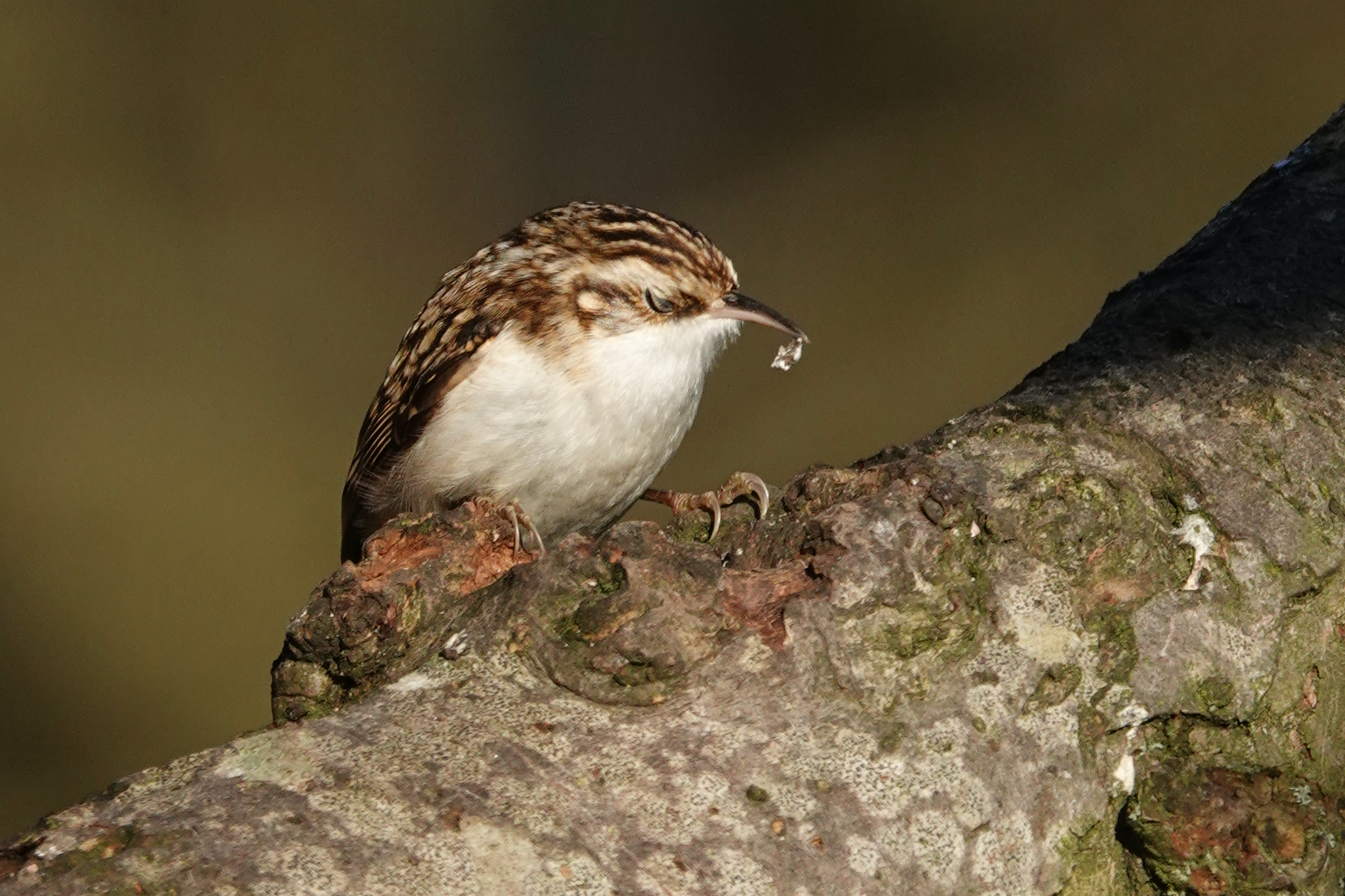
A Treecreeper on a branch carrying a pale insect or grub in its bill

Food found

A close view of the classic Treecreeper profile: pale eyebrow, fine downcurved bill and huge feet with long hooked claws for gripping bark. It has found a small morsel tucked into the bark - exactly the kind of hidden prey that larger birds overlook. Treecreepers can work through a tree with astonishing thoroughness.

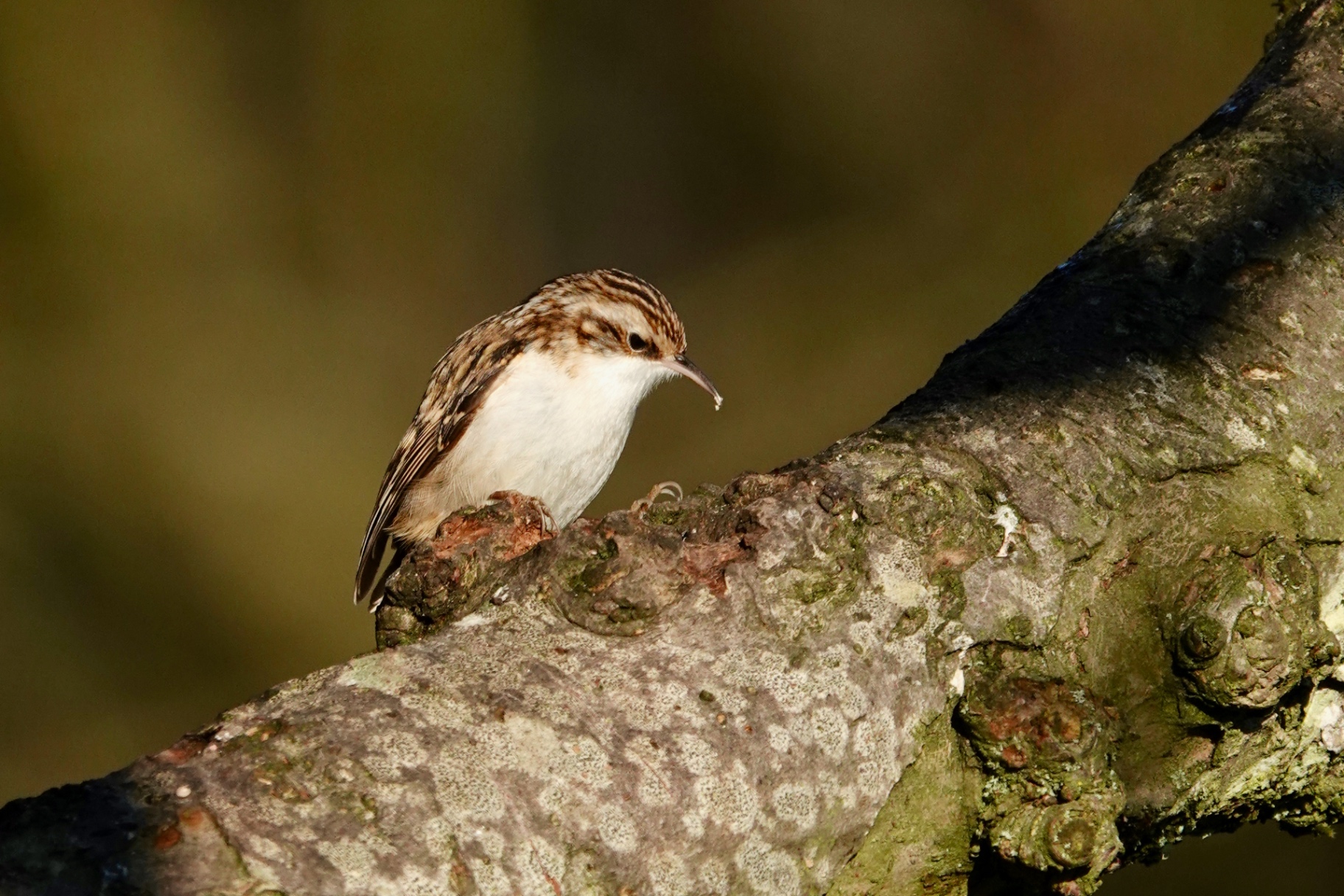
A Treecreeper standing lightly on a branch with prey at the tip of its bill

Pausing before the next climb

Although we usually think of Treecreepers on vertical trunks, they also use thicker branches like this while moving between feeding spots. The bird is small enough to be almost weightless on the branch, but the toes and claws are enormous for its size - perfect equipment for inching its way upwards over rough bark.

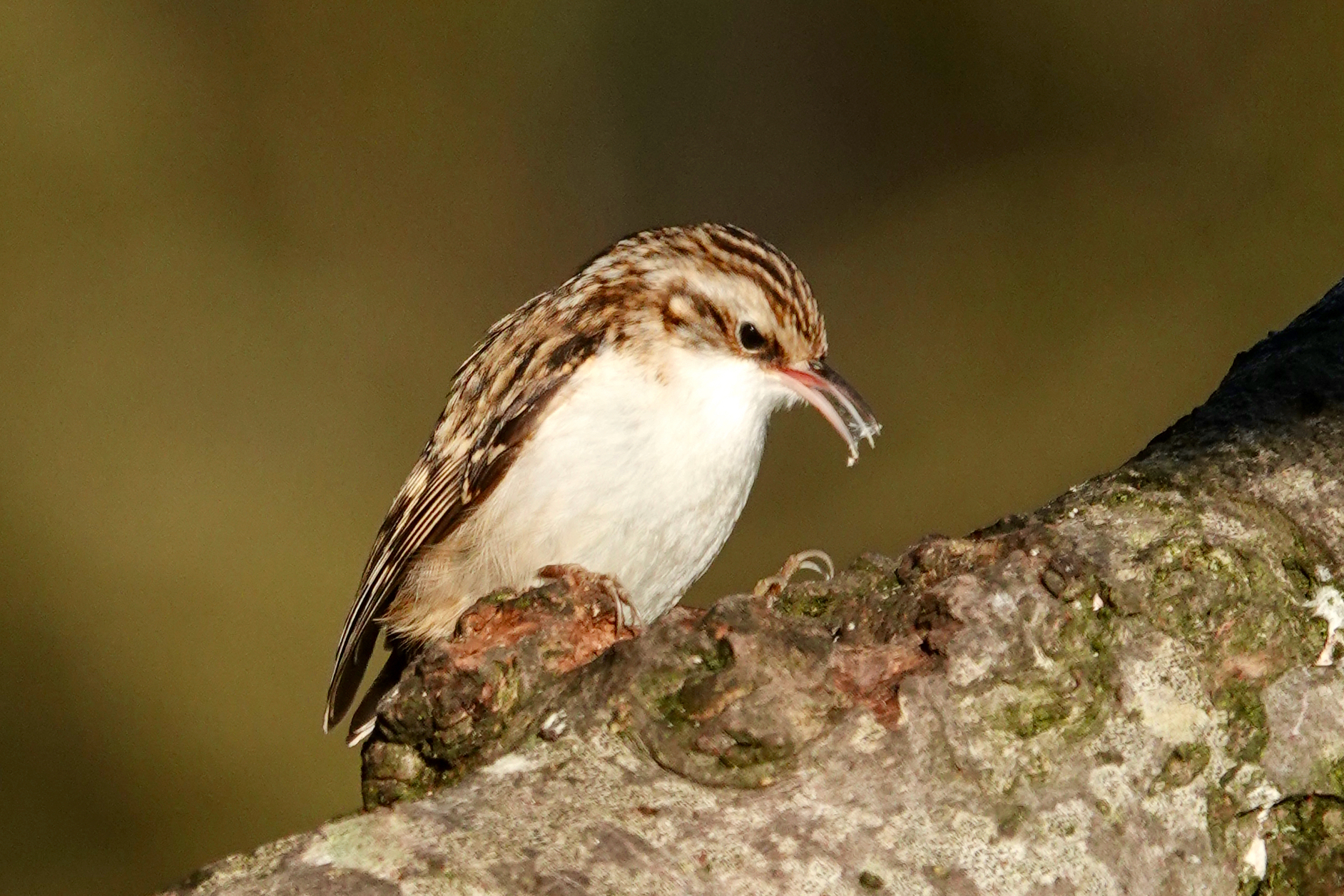
A Treecreeper lit by low winter sun holding food in its curved bill

Built for bark-foraging

The long curved bill is not for cracking seeds - it is a precision tool for lifting flakes of bark and teasing out insects and spiders. In winter, when leaves are gone and food is tucked away in bark crevices, Treecreepers become easier to spot, especially if you watch quietly for movement on the trunk rather than trying to find the bird by shape alone.

How it fits into North Yorkshire wildlife

This bird is part of the moving life of North Yorkshire, linking coast, woodland, farmland and gardens. Its success depends on enough food, safe nesting places and seasonal timing that still matches the landscape around it.

How it interacts with the wider landscape

Its place in the food web connects insects, seeds, small mammals, shrubs, trees or fish with the larger rhythms of weather and migration.

Seasonal rhythm

Spring and early summer are often the most important months, when breeding, migration and food availability need to line up.

Where to look and what to notice

Look for movement, calls, feeding behaviour and the kind of habitat this bird depends on, such as hedgerow, garden, moorland edge or sea cliff.