
Back to the illustration

Wildlife - Birds

Starling

Glossy, noisy and highly social, the Starling is one of the UK's most familiar birds. In good light the dark plumage shines with green and purple iridescence, while winter birds are heavily speckled with pale spots. They stride across lawns probing for leatherjackets, gather in chattering flocks and raise fast-growing broods in holes and nest boxes.

Species description adapted from RSPB and BTO references - see links below.

North Yorkshire species profileGo to Wildlife Identification
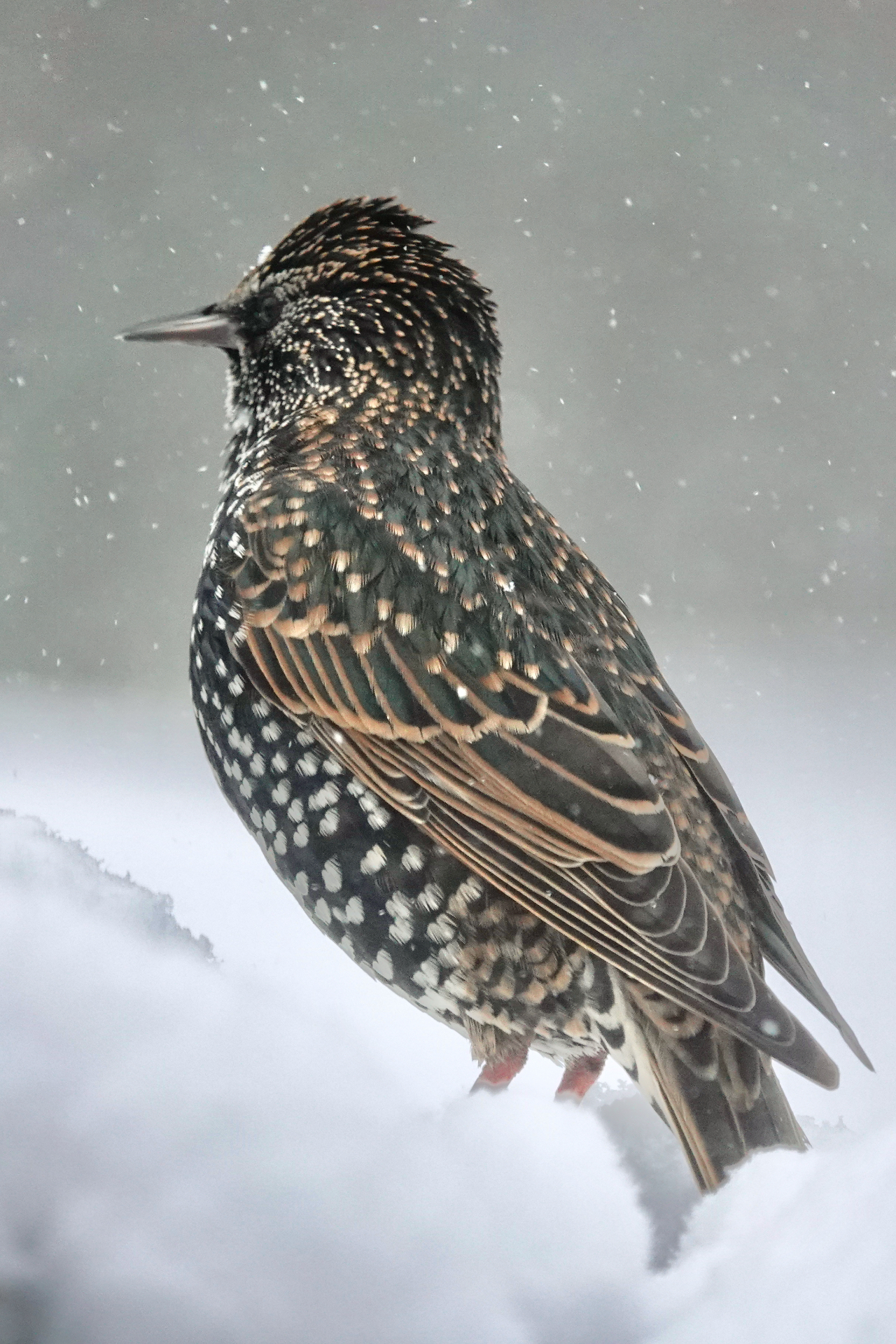
A Starling perched in falling snow, showing pale spots across its dark plumage

Birds - Photo ID

Starling - photo identification

Glossy, noisy and highly social, the Starling is one of the UK's most familiar birds. In good light the dark plumage shines with green and purple iridescence, while winter birds are heavily speckled with pale spots. They stride across lawns probing for leatherjackets, gather in chattering flocks and raise fast-growing broods in holes and nest boxes.

Photographs by Rob - taken in and around the North York Moors.

A Starling perched in falling snow, showing pale spots across its dark plumage

Starling in winter snow

This is classic winter Starling plumage - dark feathers tipped pale, creating the beautifully spangled look that gives the bird its starry name. In cold weather Starlings rely on lawns, pasture and garden feeding areas for grubs and worms, and they often fluff up into a rounded shape like this to conserve heat.

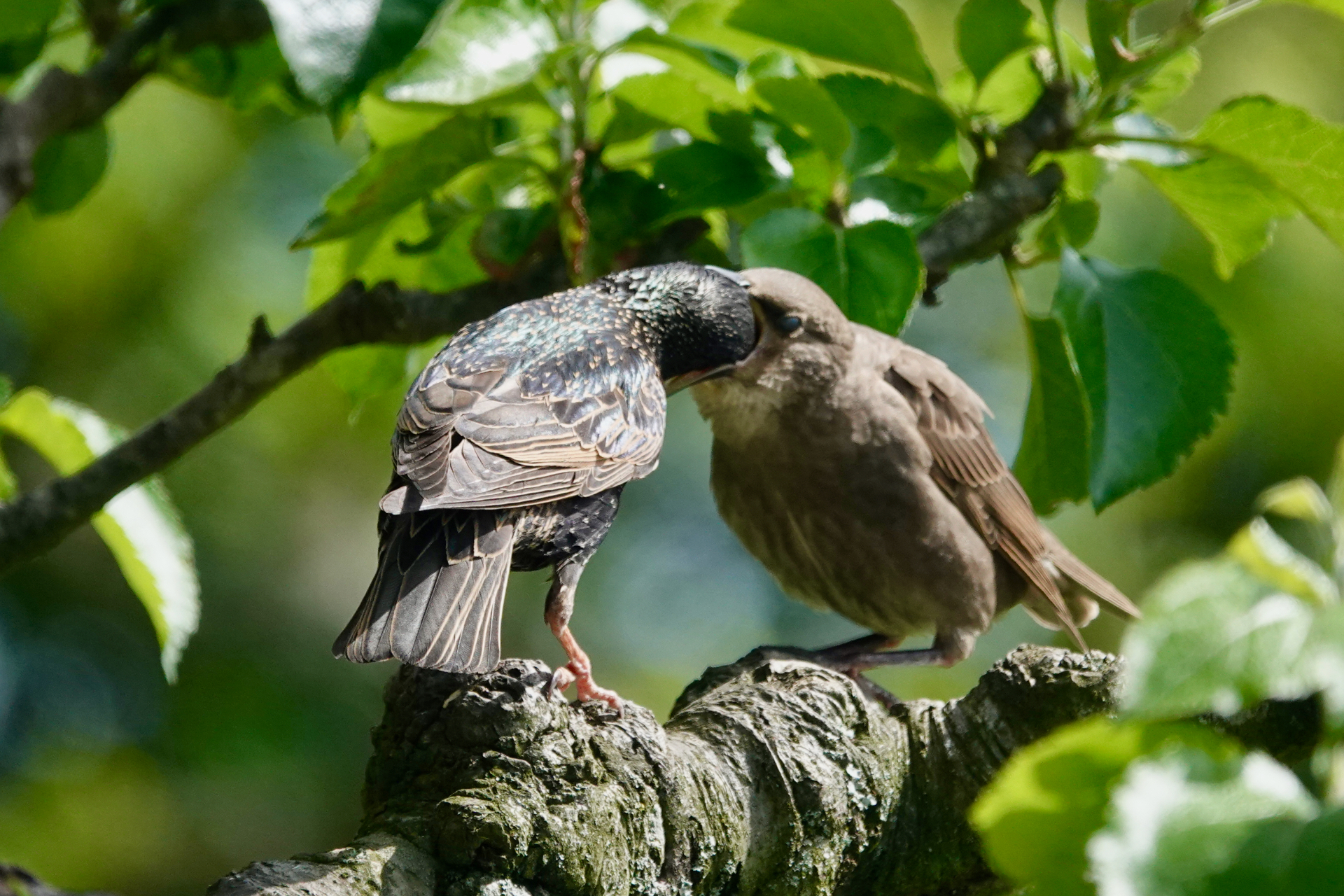
An adult Starling feeding a begging fledgeling on a tree branch

Adult feeding a fledgeling

Young Starlings leave the nest still brown and much plainer than the adults, then spend days following their parents and begging noisily for food. The adult here shows the sleeker, darker plumage and longer pointed bill, while the fledgeling is softer brown with a shorter-looking bill and a dependent, wide-gaped feeding posture.

How it fits into North Yorkshire wildlife

This bird is part of the moving life of North Yorkshire, linking coast, woodland, farmland and gardens. Its success depends on enough food, safe nesting places and seasonal timing that still matches the landscape around it.

How it interacts with the wider landscape

Its place in the food web connects insects, seeds, small mammals, shrubs, trees or fish with the larger rhythms of weather and migration.

Seasonal rhythm

Spring and early summer are often the most important months, when breeding, migration and food availability need to line up.

Where to look and what to notice

Look for movement, calls, feeding behaviour and the kind of habitat this bird depends on, such as hedgerow, garden, moorland edge or sea cliff.