
Back to the illustration

Wildlife - Birds

Sparrowhawk

A small, dashing bird of prey of woods, farmland and gardens. Short rounded wings and a long tail let it twist through trees at speed in pursuit of small birds. Females are noticeably bigger than males, with brown upperparts and barred grey-brown underparts; males are slate-grey above with rusty-orange barring below.

Species description adapted from RSPB and BTO references - see links below.

North Yorkshire species profileGo to Wildlife Identification
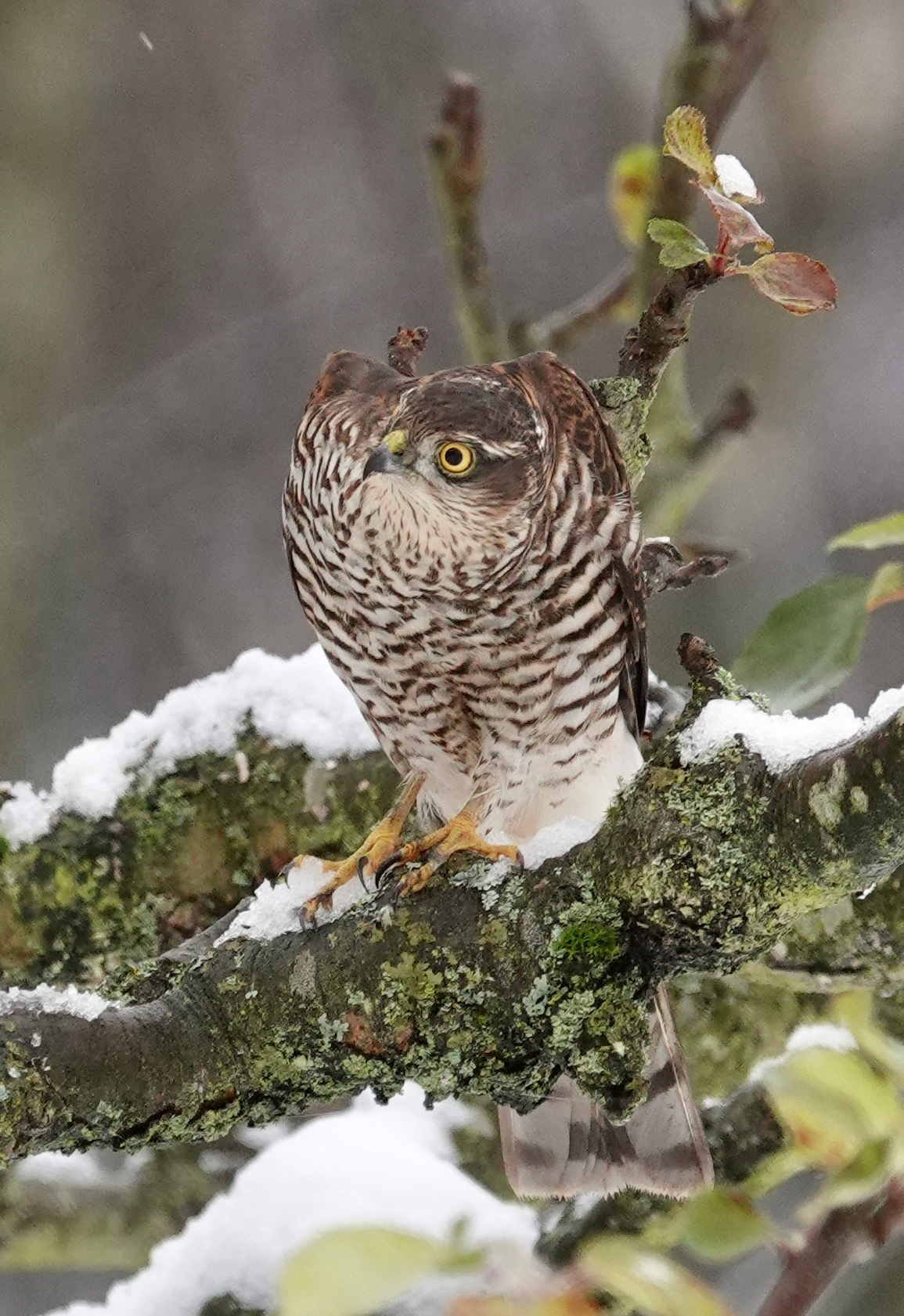
A female Sparrowhawk perched on a snowy lichen-covered branch, glaring sideways with a piercing yellow eye

Birds - Photo ID

Sparrowhawk - photo identification

A small, dashing bird of prey of woods, farmland and gardens. Short rounded wings and a long tail let it twist through trees at speed in pursuit of small birds. Females are noticeably bigger than males, with brown upperparts and barred grey-brown underparts; males are slate-grey above with rusty-orange barring below.

Photographs by Rob - taken in and around the North York Moors.

A female Sparrowhawk perched on a snowy lichen-covered branch, glaring sideways with a piercing yellow eye

Sparrowhawk that missed its meal

A classic 'Sprawk' pose - hunched on a mossy branch in the snow, fierce yellow eye scanning the garden after a failed strike at the feeders. Note the heavy dark barring across the chest, the yellow legs and feet, and the broad supercilium above the eye that gives Sparrowhawks their stern expression. The blurred shape lower in the frame is the tail flicking - they rarely sit still for long. Sparrowhawks are the main reason small birds suddenly fall silent in the garden; a brief flat-out chase, and then either a meal or, as here, a return to the perch to wait.

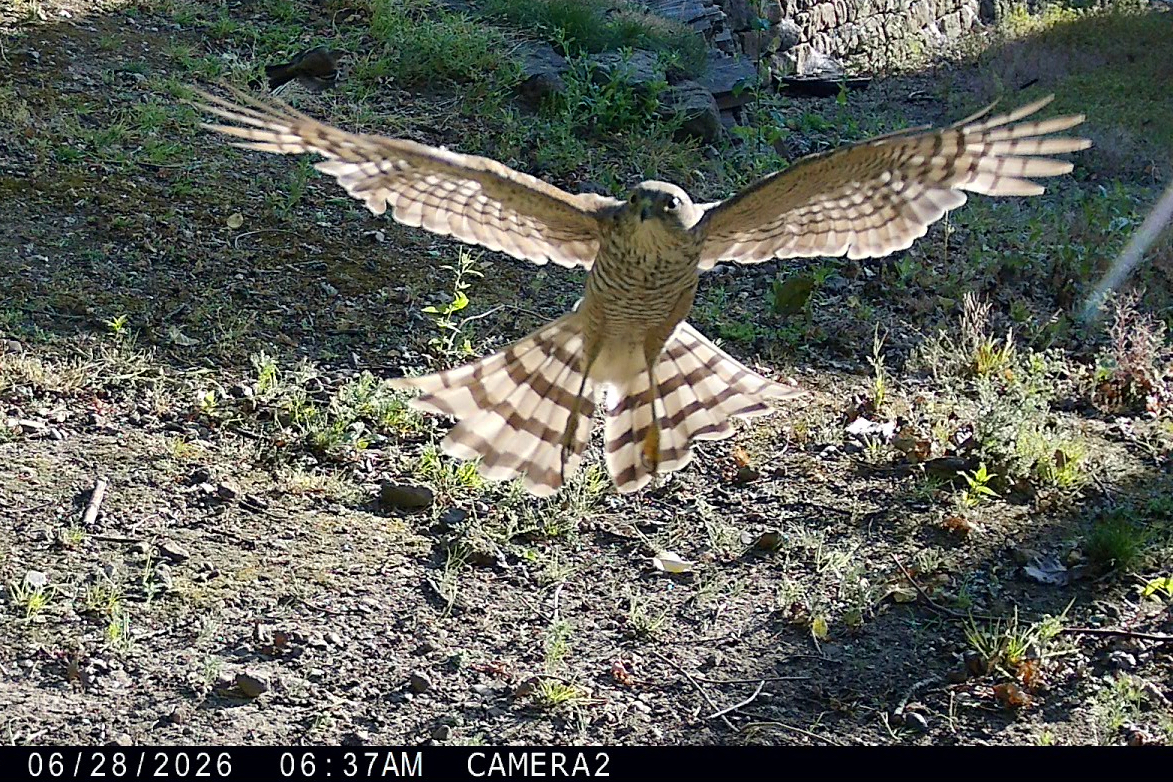
A Sparrowhawk caught by a trail camera in mid-flight, wings and barred tail fully fanned

Caught on the trail camera - wings fully spread

A trail camera has frozen this Sparrowhawk in the split-second of a low strike across open ground at dawn. The fully fanned tail and broad rounded wings - with their bold dark barring - are exactly the shape designed for sudden braking and turning between hedges and trees. This is the manoeuvre that lets a Sparrowhawk burst through a garden, twist past a fence and snatch a small bird off a feeder before anyone has time to react.

How it fits into North Yorkshire wildlife

This bird is part of the moving life of North Yorkshire, linking coast, woodland, farmland and gardens. Its success depends on enough food, safe nesting places and seasonal timing that still matches the landscape around it.

How it interacts with the wider landscape

Its place in the food web connects insects, seeds, small mammals, shrubs, trees or fish with the larger rhythms of weather and migration.

Seasonal rhythm

Spring and early summer are often the most important months, when breeding, migration and food availability need to line up.

Where to look and what to notice

Look for movement, calls, feeding behaviour and the kind of habitat this bird depends on, such as hedgerow, garden, moorland edge or sea cliff.