
Back to the illustration

Wildlife - Birds

Song Thrush

The Song Thrush is a much-loved garden bird famous for its rich, repeated song - each phrase delivered two or three times over. Smaller and warmer brown than the Mistle Thrush, with neat black arrow-shaped spots on a creamy-buff breast. Numbers have declined sharply in recent decades, so every Song Thrush in the garden matters. They are well-known for using a favourite stone as an 'anvil' to smash open snail shells.

Species description adapted from RSPB and BTO references - see links below.

North Yorkshire species profileGo to Wildlife Identification
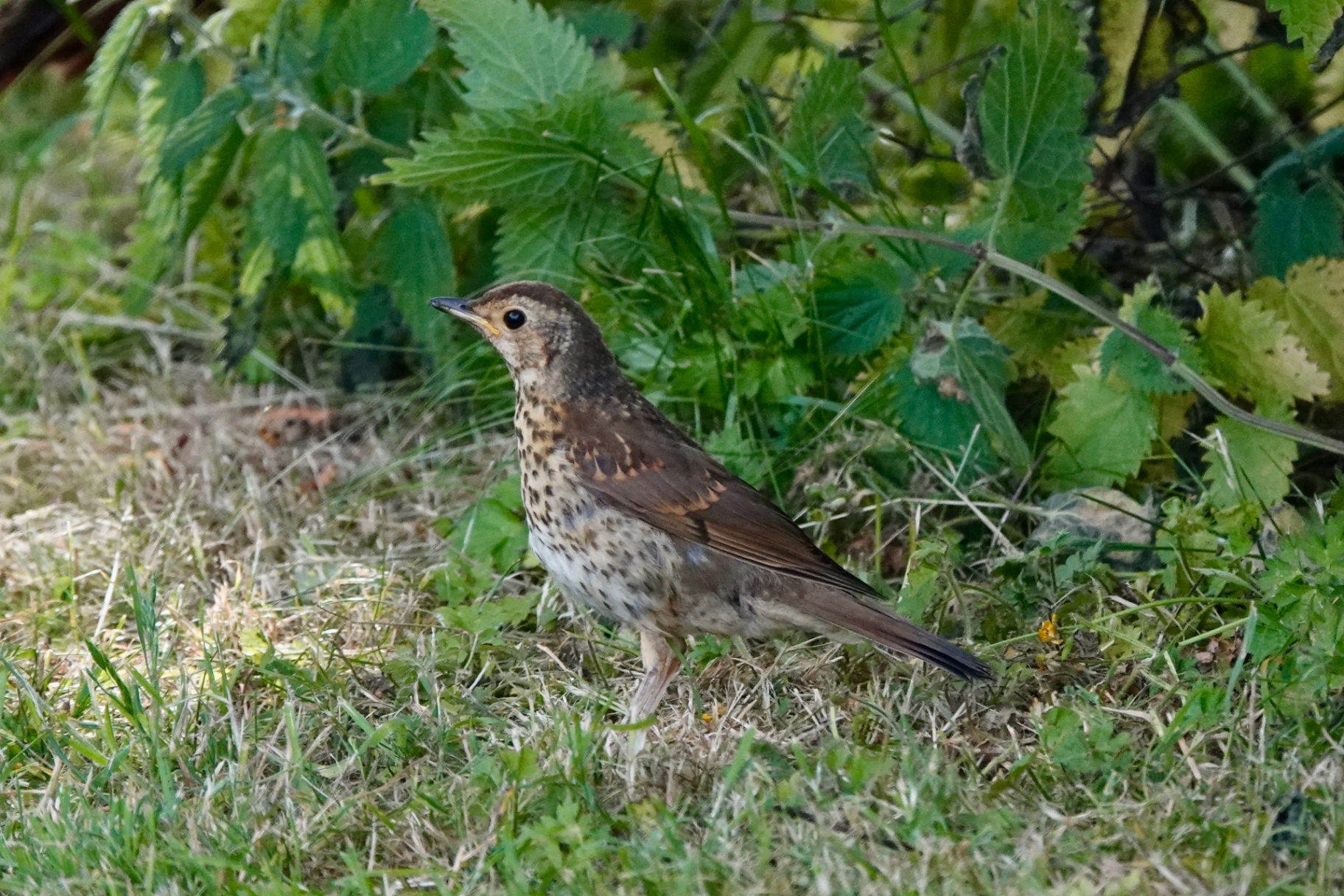
A juvenile Song Thrush standing on grass beside nettles

Birds - Photo ID

Song Thrush - photo identification

The Song Thrush is a much-loved garden bird famous for its rich, repeated song - each phrase delivered two or three times over. Smaller and warmer brown than the Mistle Thrush, with neat black arrow-shaped spots on a creamy-buff breast. Numbers have declined sharply in recent decades, so every Song Thrush in the garden matters. They are well-known for using a favourite stone as an 'anvil' to smash open snail shells.

Photographs by Rob - taken in and around the North York Moors.

A juvenile Song Thrush standing on grass beside nettles

Juvenile Song Thrush

This is a recently-fledged young Song Thrush, picked out by the pale buff streaks and spots across the head and back - juvenile feathering that breaks up its outline against the leaf litter. The breast is already showing the dark arrow-shaped spots on a warm buff background that will mark it as a Song Thrush for life. Juveniles spend their first days hiding low down in cover like this patch of nettles, where parents can still feed them while they learn to forage.

How it fits into North Yorkshire wildlife

This bird is part of the moving life of North Yorkshire, linking coast, woodland, farmland and gardens. Its success depends on enough food, safe nesting places and seasonal timing that still matches the landscape around it.

How it interacts with the wider landscape

Its place in the food web connects insects, seeds, small mammals, shrubs, trees or fish with the larger rhythms of weather and migration.

Seasonal rhythm

Spring and early summer are often the most important months, when breeding, migration and food availability need to line up.

Where to look and what to notice

Look for movement, calls, feeding behaviour and the kind of habitat this bird depends on, such as hedgerow, garden, moorland edge or sea cliff.