
Back to the illustration

Wildlife - Birds

Red-legged Partridge

A plump, round gamebird with a distinctive white throat bordered by a bold black necklace that breaks into fine streaks down the breast, bright red beak and red legs, and beautifully barred flanks in chestnut, black and white. Introduced from continental Europe in the 18th century, the Red-legged (or 'French') Partridge is now widespread across farmland, field margins and even gardens across much of England.

Species description adapted from RSPB and BTO references - see links below.

North Yorkshire species profileGo to Wildlife Identification
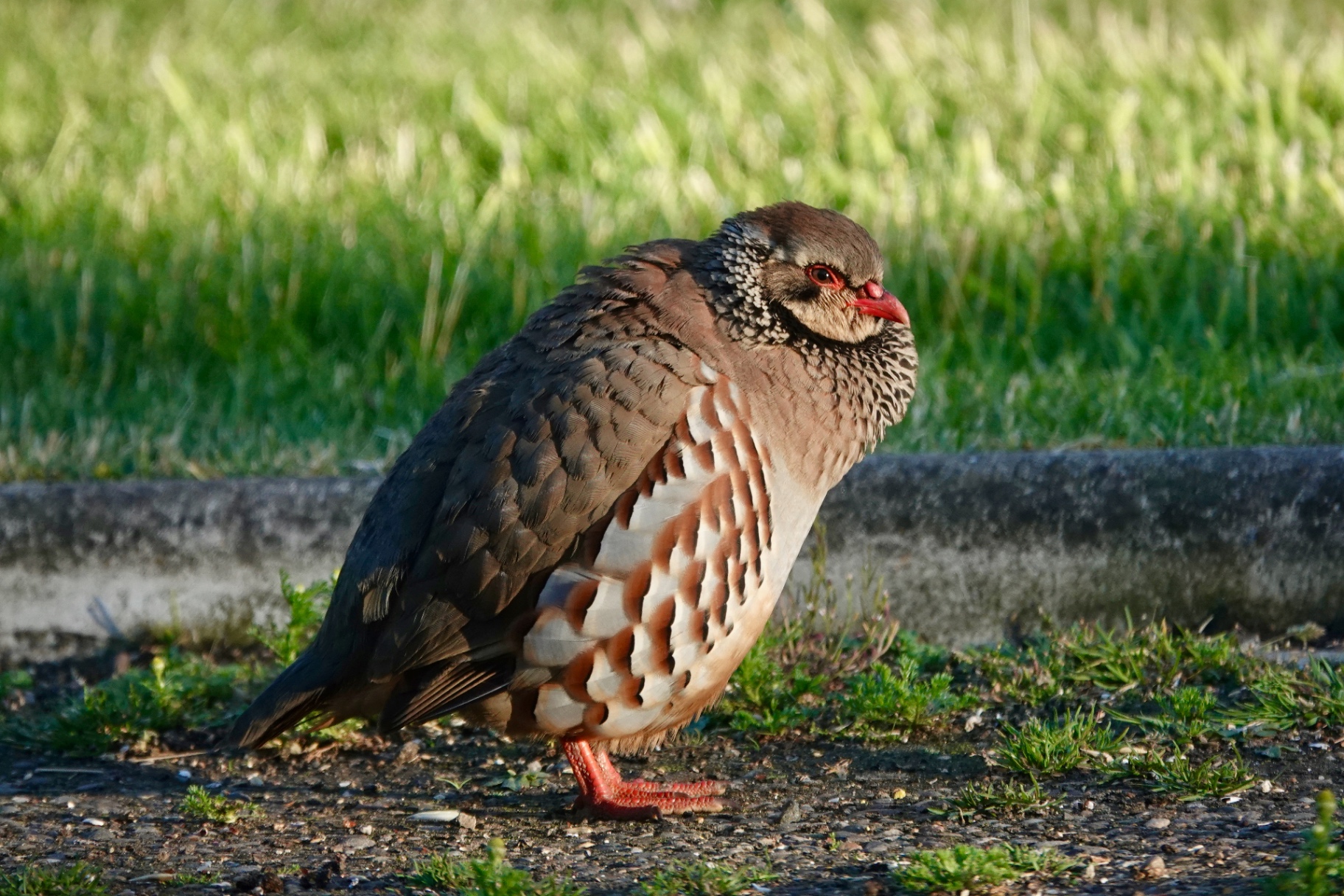
A Red-legged Partridge standing on a garden path with fluffed-up feathers drying in the sun, showing the red beak, red eye-ring and boldly barred flanks

Birds - Photo ID

Red-legged Partridge - photo identification

A plump, round gamebird with a distinctive white throat bordered by a bold black necklace that breaks into fine streaks down the breast, bright red beak and red legs, and beautifully barred flanks in chestnut, black and white. Introduced from continental Europe in the 18th century, the Red-legged (or 'French') Partridge is now widespread across farmland, field margins and even gardens across much of England.

Photographs by Rob - taken in and around the North York Moors.

A Red-legged Partridge standing on a garden path with fluffed-up feathers drying in the sun, showing the red beak, red eye-ring and boldly barred flanks

Drying out in the morning sun

Feathers fluffed right up like this help trap warm air and dry damp plumage after rain or a dip in a puddle. The key ID features are all on show: a bright red beak and red eye-ring, a warm buff face bordered by a black band that runs through the eye and around the throat, and the stunning barred flanks in chestnut, black, cream and grey-blue. The legs and feet are a vivid coral-red, which gives the species its name. Grey Partridges (much rarer these days) have an orange face and lack the bold barring.

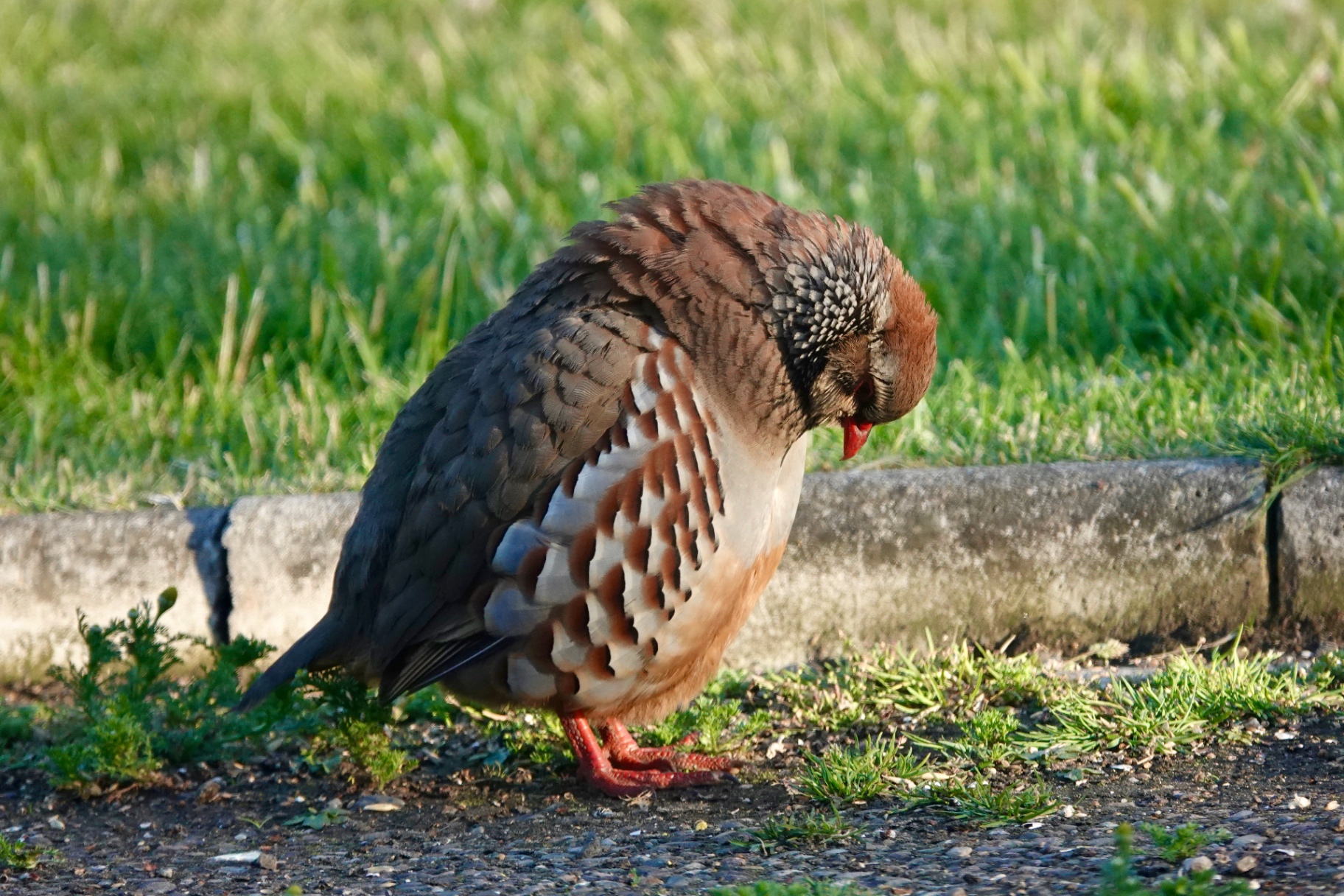
A Red-legged Partridge resting on a kerb edge with its head tucked down and eyes closed, feathers fluffed for warmth

Head tucked in for a quiet moment

Partridges will often stop and rest in a sheltered spot along a wall, kerb or hedge base, tucking the head down and closing their eyes to doze. They are ground-loving birds - they nest, feed and roost on the ground, and generally only fly when disturbed, exploding into a low fast whirr of wings before gliding down again. Leaving quiet field margins, uncut grass strips and hedge bases undisturbed gives them the shelter they need to raise a brood.

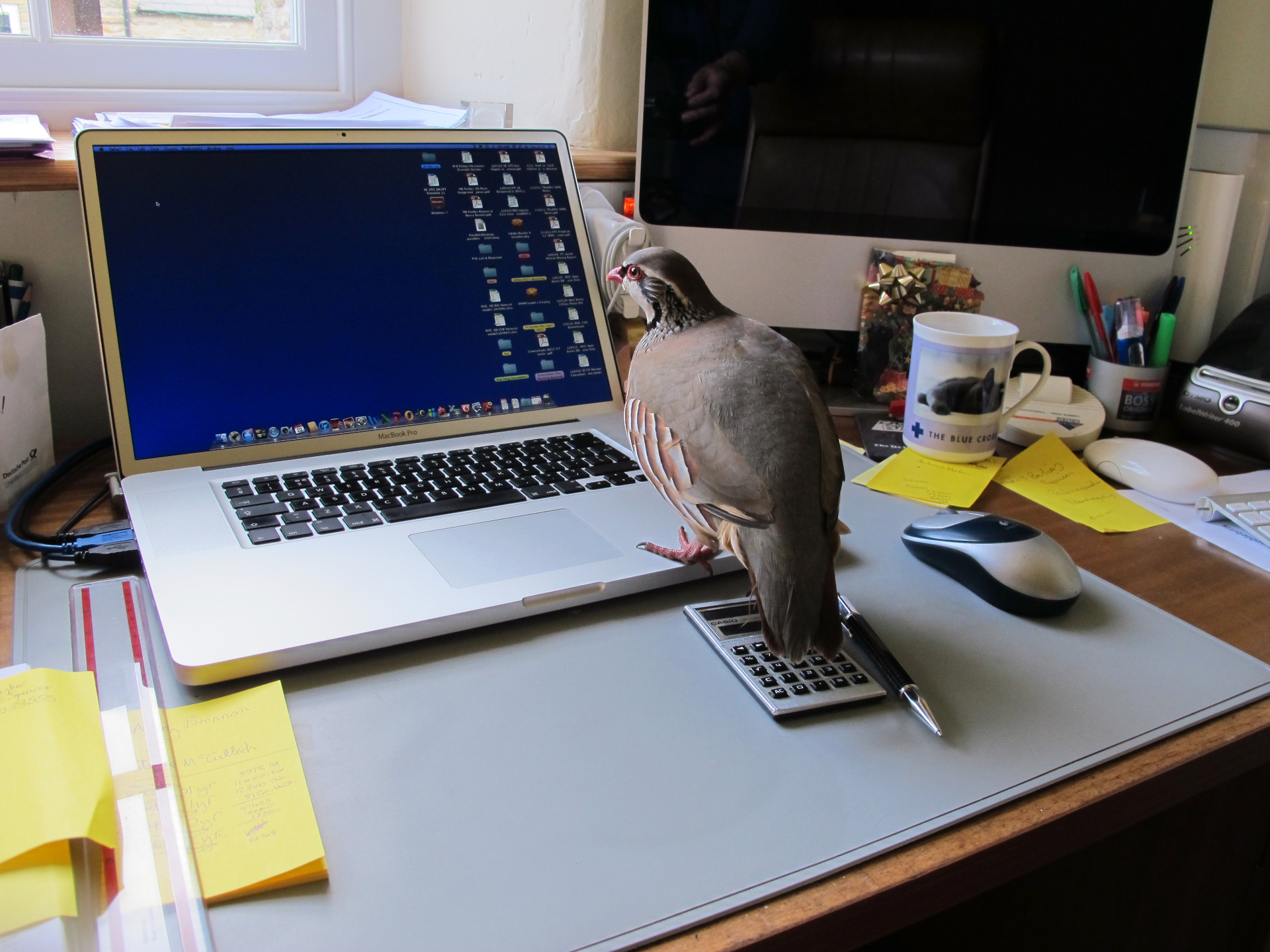
A Red-legged Partridge standing on a desk beside an open laptop, with its foot on a calculator and a computer mouse nearby

The office assistant reports for duty

Occasionally, a Red-legged Partridge decides that the wild countryside is over-rated and takes a keen interest in indoor life. This one wandered in through an open door, hopped up onto the desk and set about auditing the accounts. They are naturally quite tame birds and, once habituated to people, can become surprisingly bold visitors. A gentle escort back outside (with a door propped open) is usually all that is needed - and it makes for one of those quietly magical wildlife moments you never quite forget.

How it fits into North Yorkshire wildlife

This bird is part of the moving life of North Yorkshire, linking coast, woodland, farmland and gardens. Its success depends on enough food, safe nesting places and seasonal timing that still matches the landscape around it.

How it interacts with the wider landscape

Its place in the food web connects insects, seeds, small mammals, shrubs, trees or fish with the larger rhythms of weather and migration.

Seasonal rhythm

Spring and early summer are often the most important months, when breeding, migration and food availability need to line up.

Where to look and what to notice

Look for movement, calls, feeding behaviour and the kind of habitat this bird depends on, such as hedgerow, garden, moorland edge or sea cliff.