
Back to the illustration

Wildlife - Insects

Micro-moths on Dandelions

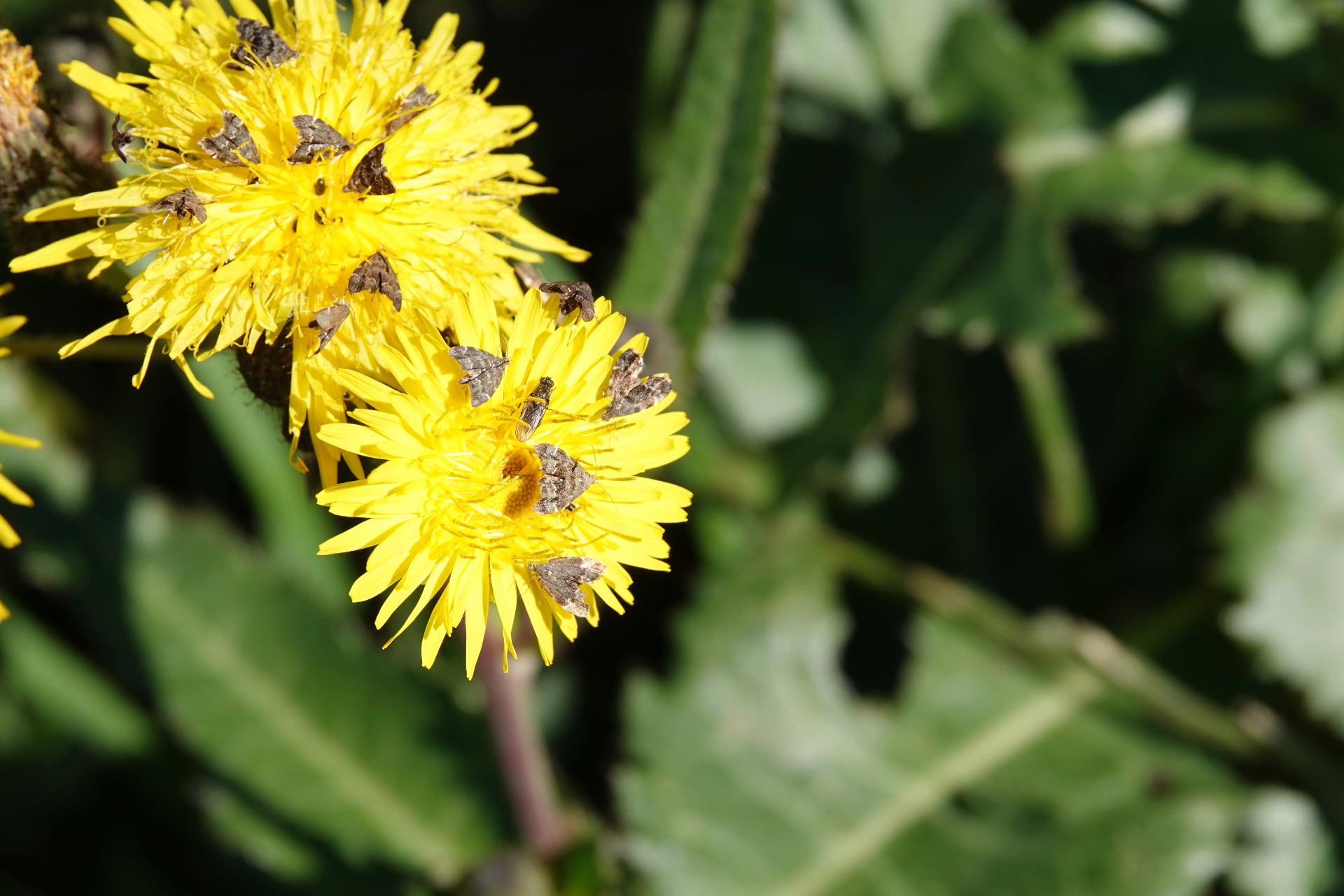
A cluster of small day-flying micro-moths gathered on dandelion flowers, feeding on the abundant nectar and pollen. Dandelions are one of the most important early-season food plants for insects, supporting bees, hoverflies, beetles and moths.

Species description adapted from RSPB and BTO references - see links below.

North Yorkshire species profileGo to Wildlife Identification
Several small grey-brown micro-moths feeding on bright yellow dandelion flowers

Insects - Photo ID

Micro-moths on Dandelions - photo identification

A cluster of small day-flying micro-moths gathered on dandelion flowers, feeding on the abundant nectar and pollen. Dandelions are one of the most important early-season food plants for insects, supporting bees, hoverflies, beetles and moths.

Photographs by Rob - taken in and around the North York Moors.

Several small grey-brown micro-moths feeding on bright yellow dandelion flowers

Micro-moths feeding on dandelion flowers

Dandelions (Taraxacum officinale) are a vital nectar source - a single flower head is actually made up of hundreds of tiny florets, each producing pollen and sugary nectar. Leaving dandelions to flower in lawns and verges through spring supports a huge range of pollinators, including these often-overlooked micro-moths whose caterpillars feed on grasses, leaf litter and low-growing plants.

How it fits into North Yorkshire wildlife

This insect is one of the small workers keeping North Yorkshire alive. Insects pollinate flowers, recycle nutrients and feed birds, bats and other wildlife, so even tiny species can have an outsized effect.

How it interacts with the wider landscape

It supports pollination, pest control or freshwater balance, and in turn becomes food for birds, mammals and amphibians.

Seasonal rhythm

Warmth, flowering cycles and clean water or shelter all affect how strongly this species can appear from one season to the next.

Where to look and what to notice

Look around flowers, ponds, field margins and sunny sheltered spots where insects can feed, hunt or breed.