
Back to the illustration

Wildlife - Birds

Long-tailed Tit

A tiny, fluffy garden bird with a ridiculously long tail, pinkish flanks, a black-and-white head and a thin peeping call. Long-tailed Tits move through scrub, hedges and gardens in small family parties, often arriving in a busy little flock that never seems to stay still for long.

Species description adapted from RSPB and BTO references - see links below.

North Yorkshire species profileGo to Wildlife Identification
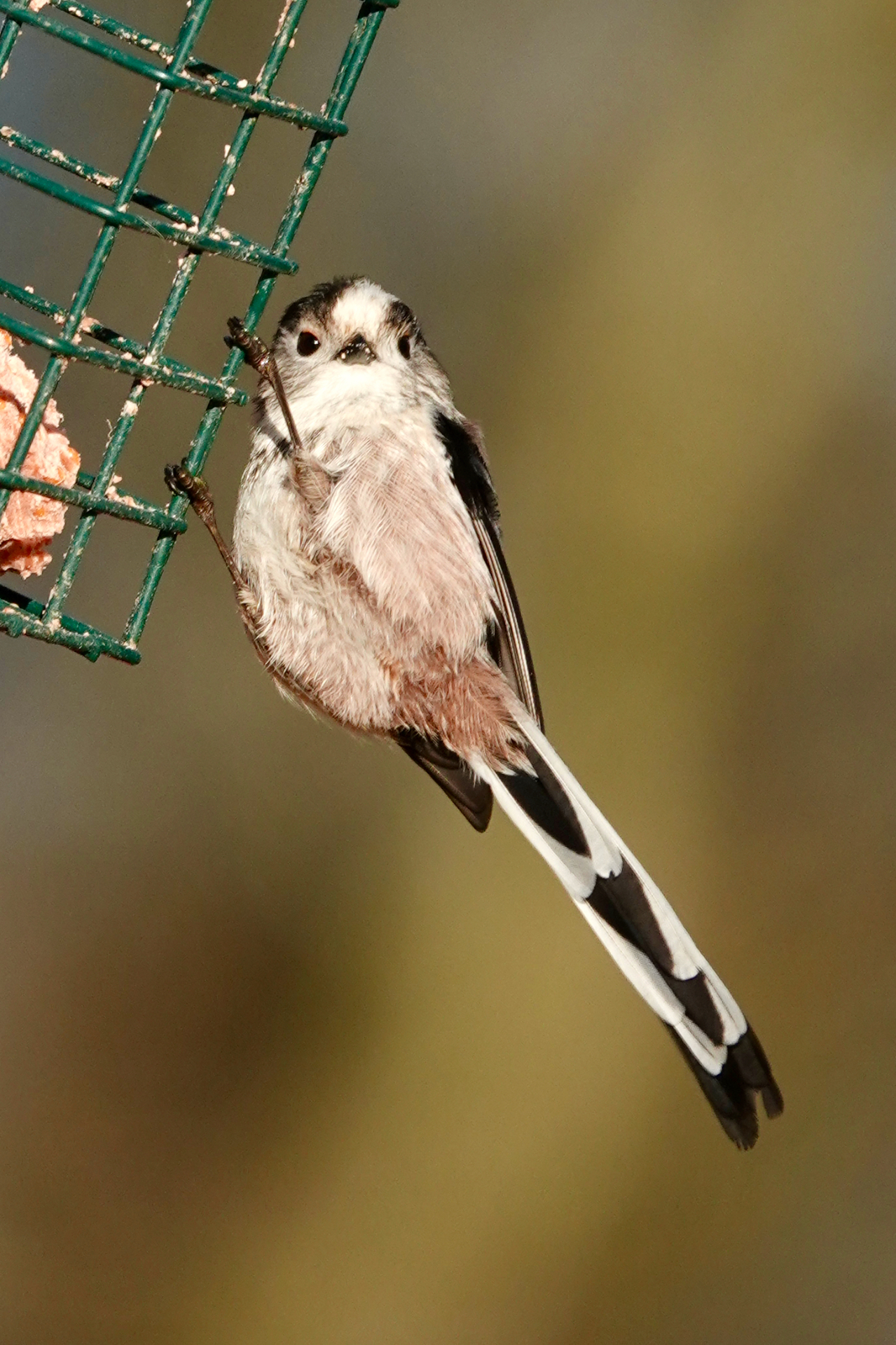
A Long-tailed Tit clinging to a green suet feeder

Birds - Photo ID

Long-tailed Tit - photo identification

A tiny, fluffy garden bird with a ridiculously long tail, pinkish flanks, a black-and-white head and a thin peeping call. Long-tailed Tits move through scrub, hedges and gardens in small family parties, often arriving in a busy little flock that never seems to stay still for long.

Photographs by Rob - taken in and around the North York Moors.

A Long-tailed Tit clinging to a green suet feeder

Long-tailed Tit at the feeder

The tail is longer than the body itself and acts like a balancing pole as the bird hangs acrobatically from twigs and feeders. That soft pink wash on the flanks, dark wings and snowy face make it unmistakable once you get your eye in. In winter they travel in tight family groups, constantly calling to keep in touch.

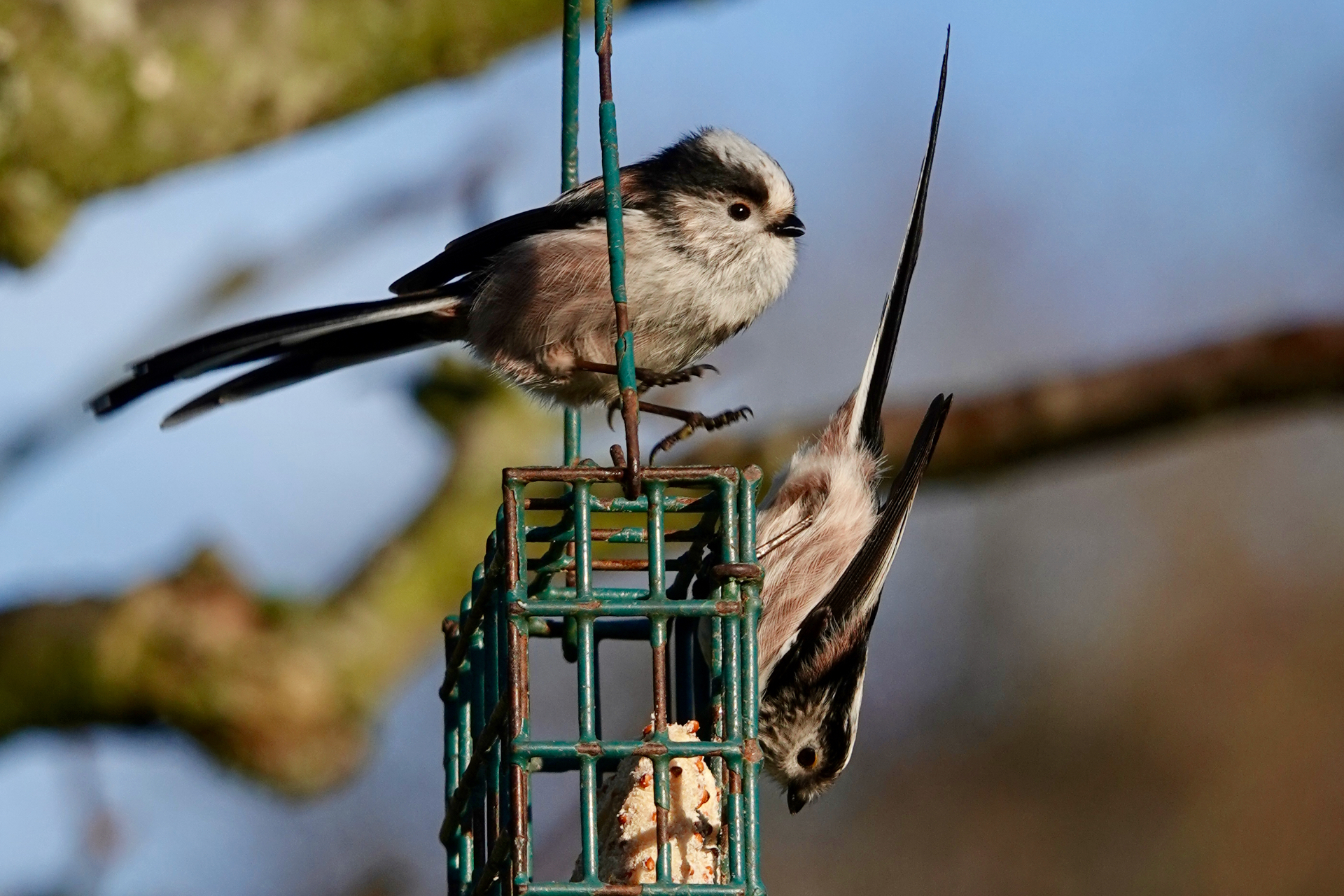
Two Long-tailed Tits feeding together on a hanging feeder

Feeding as a pair

Long-tailed Tits are highly social and often forage together, working methodically over suet, seeds and tree branches for tiny insects and spiders. Their nests are extraordinary domes of moss, lichen, feathers and spider silk - flexible enough to stretch as the chicks grow, yet beautifully camouflaged against a hedge or bramble tangle.

How it fits into North Yorkshire wildlife

This bird is part of the moving life of North Yorkshire, linking coast, woodland, farmland and gardens. Its success depends on enough food, safe nesting places and seasonal timing that still matches the landscape around it.

How it interacts with the wider landscape

Its place in the food web connects insects, seeds, small mammals, shrubs, trees or fish with the larger rhythms of weather and migration.

Seasonal rhythm

Spring and early summer are often the most important months, when breeding, migration and food availability need to line up.

Where to look and what to notice

Look for movement, calls, feeding behaviour and the kind of habitat this bird depends on, such as hedgerow, garden, moorland edge or sea cliff.