
Back to the illustration

Wildlife - Birds

Jackdaw

The smallest member of the UK crow family - compact, sooty-black with a distinctive pale silvery nape and piercing white-blue eye. Sociable and talkative, jackdaws form lifelong pairs and gather in noisy flocks around old buildings, church towers, quarries and farmyards across North Yorkshire.

Species description adapted from RSPB and BTO references - see links below.

North Yorkshire species profileGo to Wildlife Identification
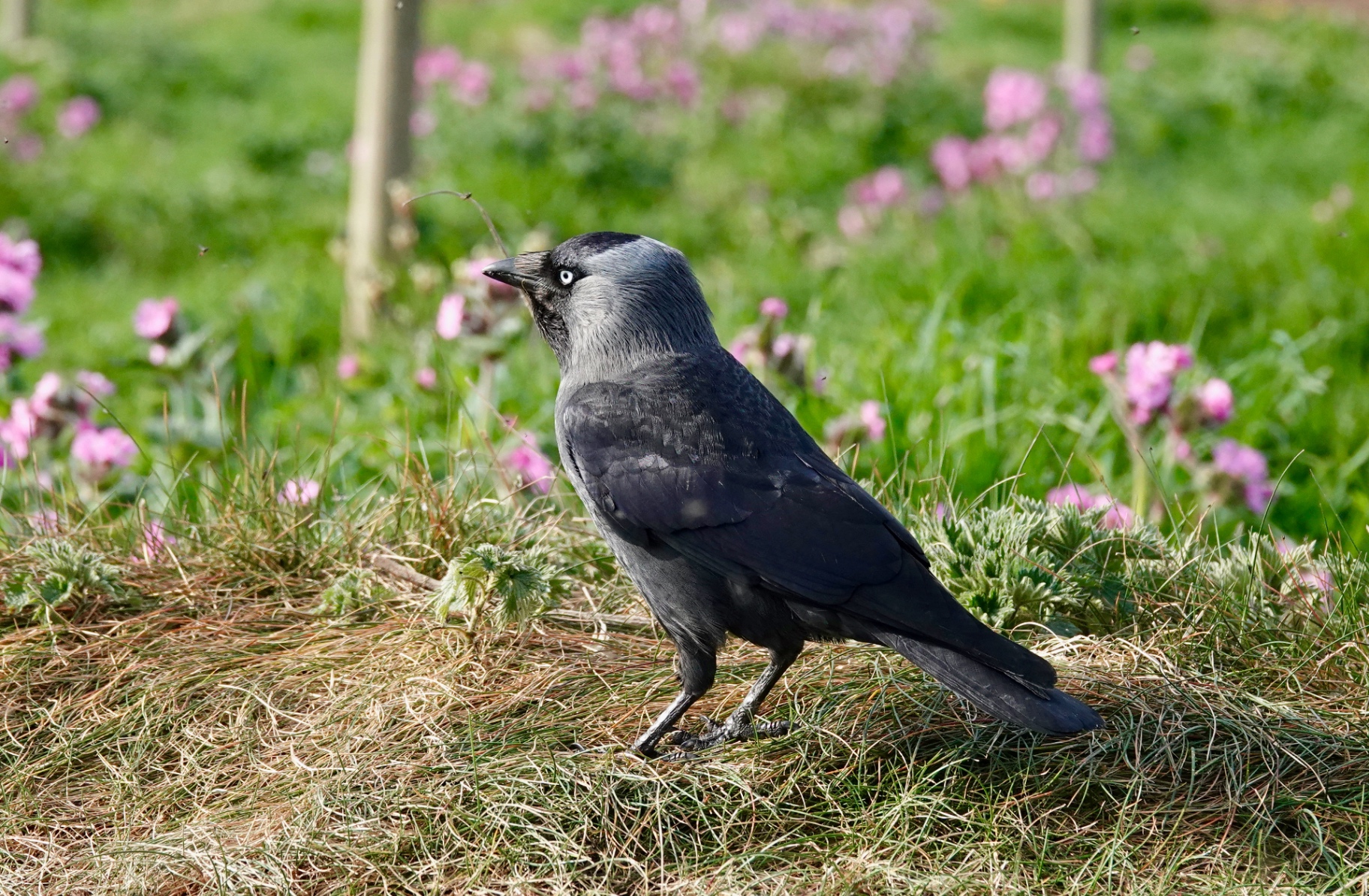
A Jackdaw standing on grass surrounded by pink wildflowers

Birds - Photo ID

Jackdaw - photo identification

The smallest member of the UK crow family - compact, sooty-black with a distinctive pale silvery nape and piercing white-blue eye. Sociable and talkative, jackdaws form lifelong pairs and gather in noisy flocks around old buildings, church towers, quarries and farmyards across North Yorkshire.

Photographs by Rob - taken in and around the North York Moors.

A Jackdaw standing on grass surrounded by pink wildflowers

Jackdaw on the grass

Note the smoky-grey shawl from the back of the head down the neck, the short stout black bill, and the cool white-blue eye - the easiest way to tell a Jackdaw from a Carrion Crow or Rook at a distance. They walk with a brisk, jaunty strut, picking off insects, worms and seeds.

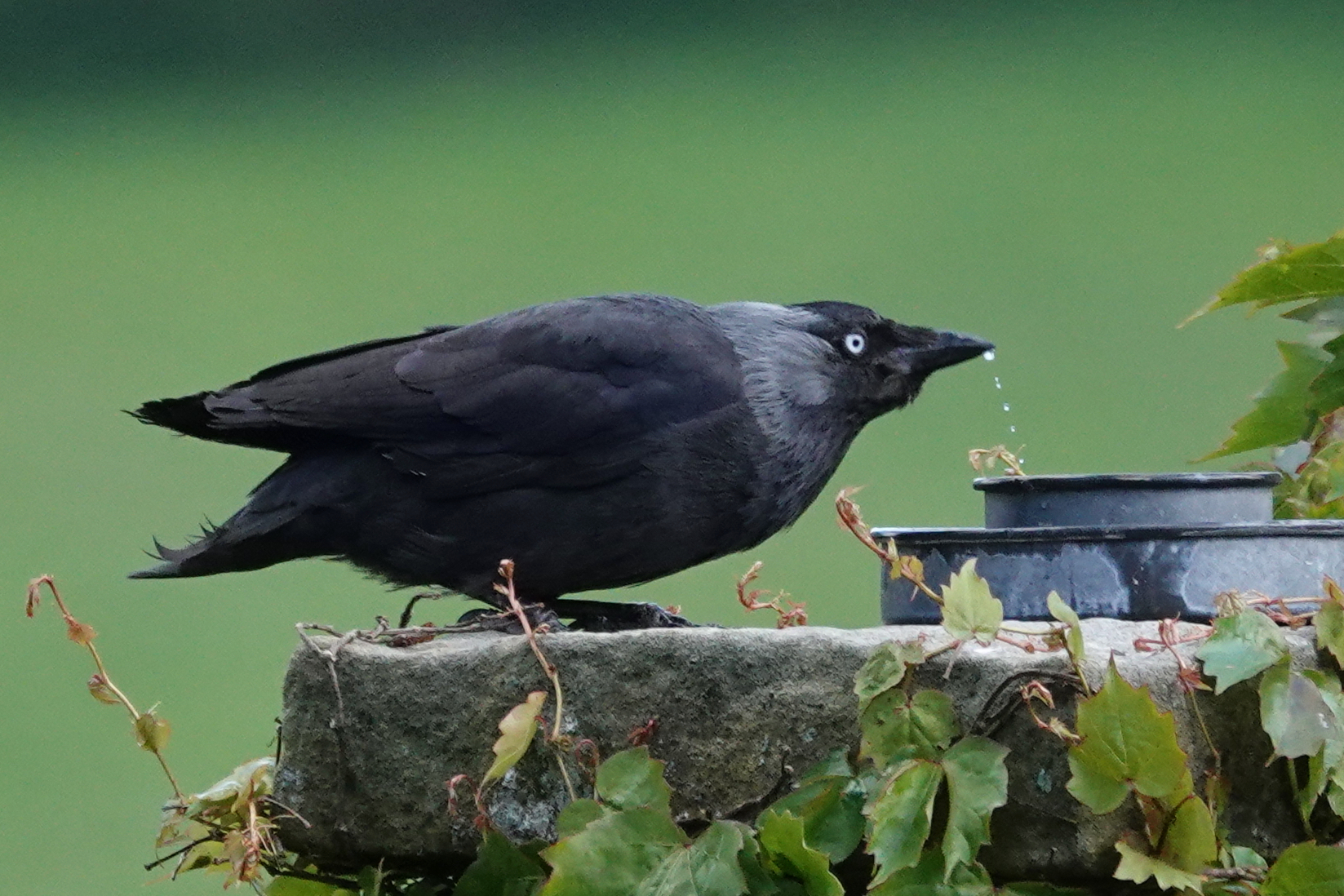
A Jackdaw leaning down to drink from a stone water bowl

Taking a drink

Jackdaws are confident garden visitors and quickly learn where water and food are reliable. They are highly intelligent - studies show they recognise individual human faces and remember which people have threatened them. They mate for life and pairs constantly preen and call to each other.

How it fits into North Yorkshire wildlife

This bird is part of the moving life of North Yorkshire, linking coast, woodland, farmland and gardens. Its success depends on enough food, safe nesting places and seasonal timing that still matches the landscape around it.

How it interacts with the wider landscape

Its place in the food web connects insects, seeds, small mammals, shrubs, trees or fish with the larger rhythms of weather and migration.

Seasonal rhythm

Spring and early summer are often the most important months, when breeding, migration and food availability need to line up.

Where to look and what to notice

Look for movement, calls, feeding behaviour and the kind of habitat this bird depends on, such as hedgerow, garden, moorland edge or sea cliff.