
Back to the illustration

Wildlife - Mammals

Hedgehog

UK hedgehog numbers have fallen from an estimated 30 million in the 1950s to fewer than 1 million today.

Species description adapted from RSPB and BTO references - see links below.

Status: Vulnerable (significant decline)North Yorkshire species profileGo to Wildlife Identification
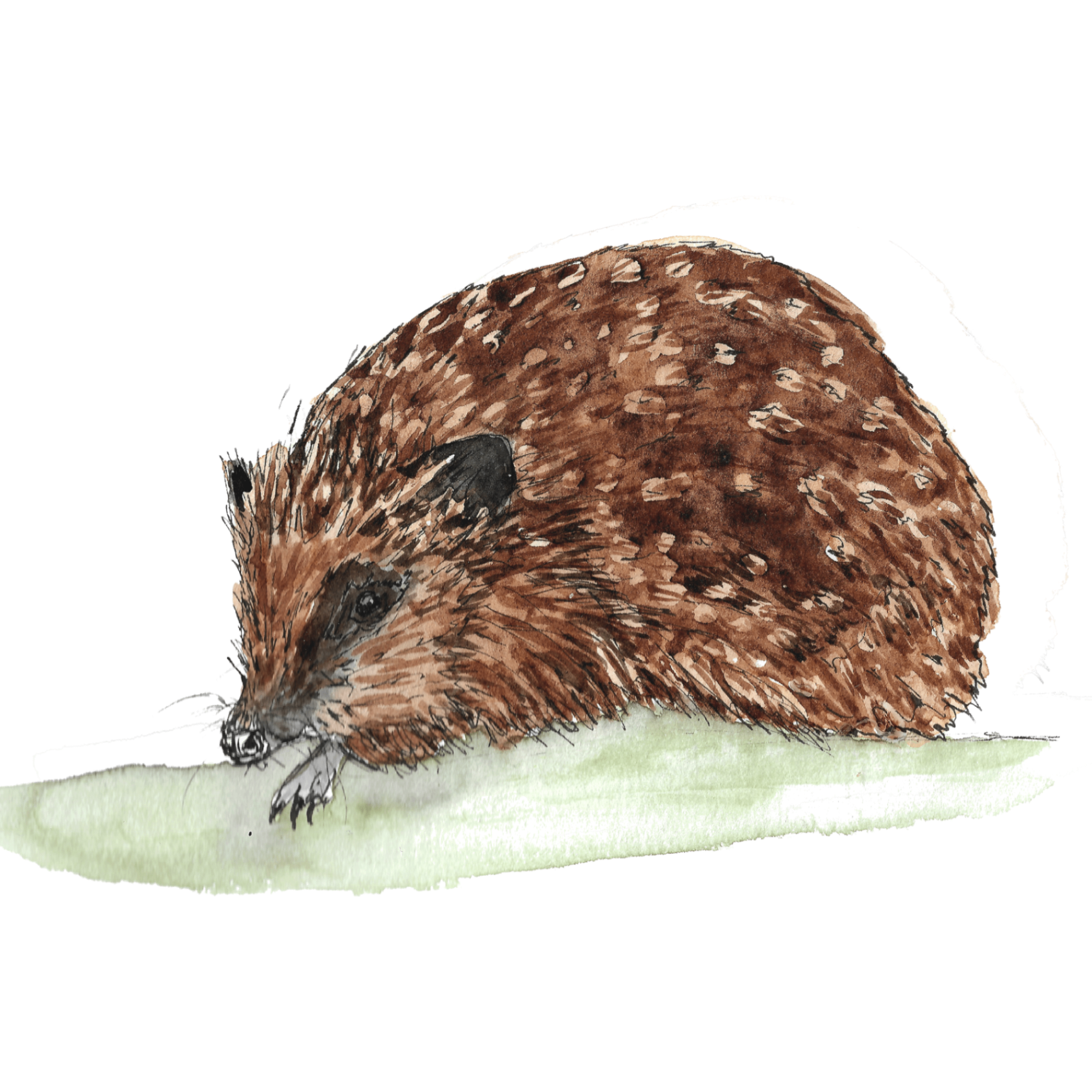
Watercolour illustration of a hedgehog moving across pale grass

Mammals - Photo ID

Hedgehog - photo identification

Britain's only spiny mammal - up to 7,000 stiff brown-and-cream spines protect a small grey-furred body. Nocturnal, snuffling through gardens and hedgerows for beetles, worms, slugs and caterpillars. Numbers have crashed by around a third in towns and a half in the countryside since 2000, making garden-friendly habitat more important than ever.

Photographs by Rob - taken in and around the North York Moors.

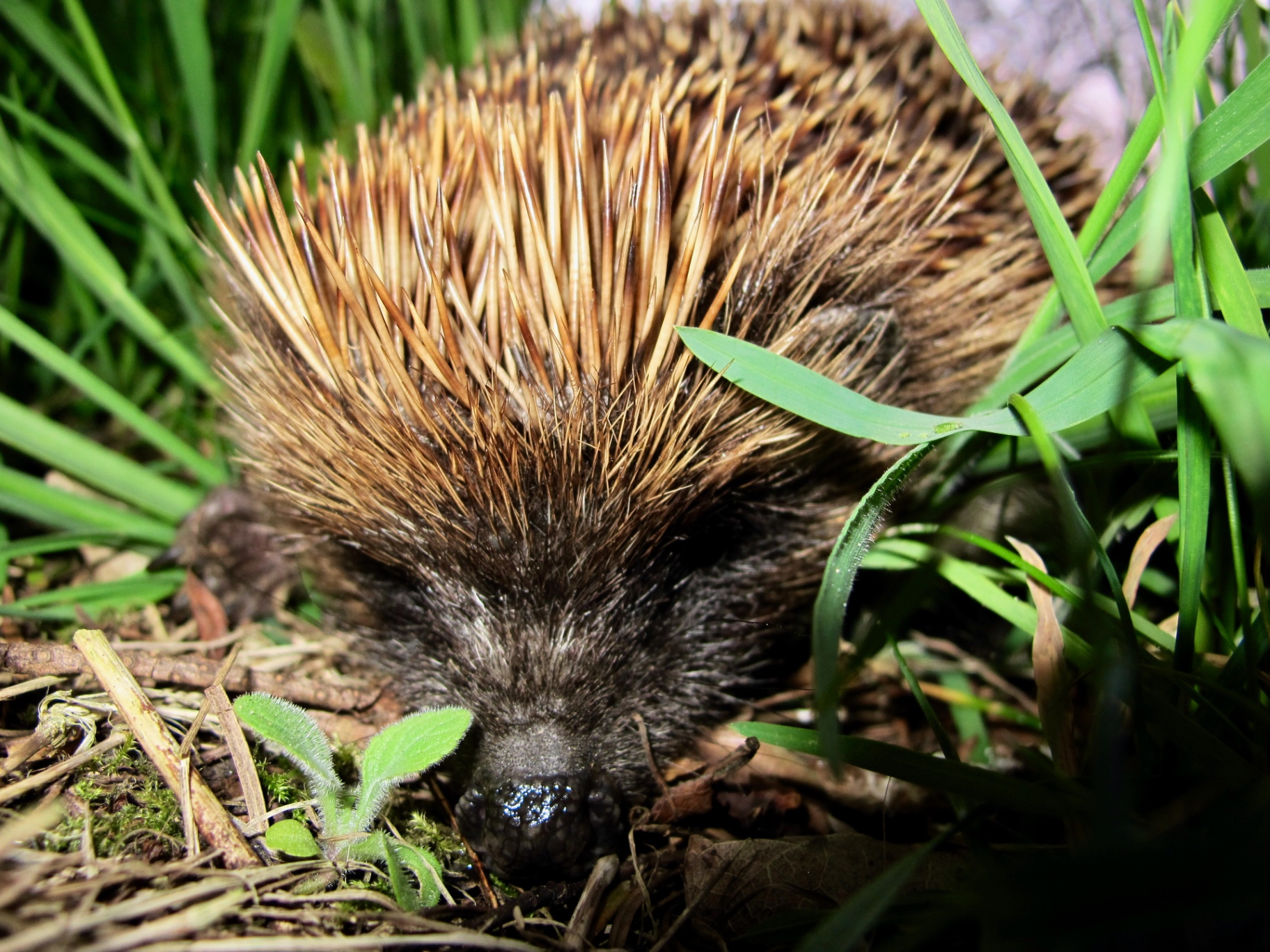
A hedgehog at ground level among grass and leaf litter

Hedgehog at ground level

Look for the banded spines (each one cream at the base, dark in the middle, pale at the tip), the dark face mask and the wet shiny snout. Hedgehogs need to travel up to a mile a night to find enough food - cut a 13x13cm 'hedgehog highway' in the bottom of garden fences to let them pass between gardens.

How it fits into North Yorkshire wildlife

Hedgehogs are one of the most loved yet most threatened small mammals in North Yorkshire. They need linked gardens, hedgerows, rough corners and insect-rich ground so they can roam safely at night between nesting and feeding spots.

How it interacts with the wider landscape

They feed on beetles, worms and other invertebrates, tying them closely to soil health and pesticide use. When hedgehogs disappear, it often points to a wider problem in how a landscape is connected and cared for.

Seasonal rhythm

Spring to autumn is their active season, while winter brings hibernation in dry sheltered nests hidden under leaves, compost heaps or dense cover.

Where to look and what to notice

Look for rustling after dark, small tracks and droppings, and signs of movement between gardens where there are gaps under fences and plenty of cover.