
Back to the illustration

Wildlife - Mammals

Red Fox

Equally at home on upland moorland, in farmland, and in urban gardens. Foxes are omnivores, eating everything from rabbits and voles to earthworms and berries.

Species description adapted from RSPB and BTO references - see links below.

Status: Least concern (stable)North Yorkshire species profileGo to Wildlife Identification
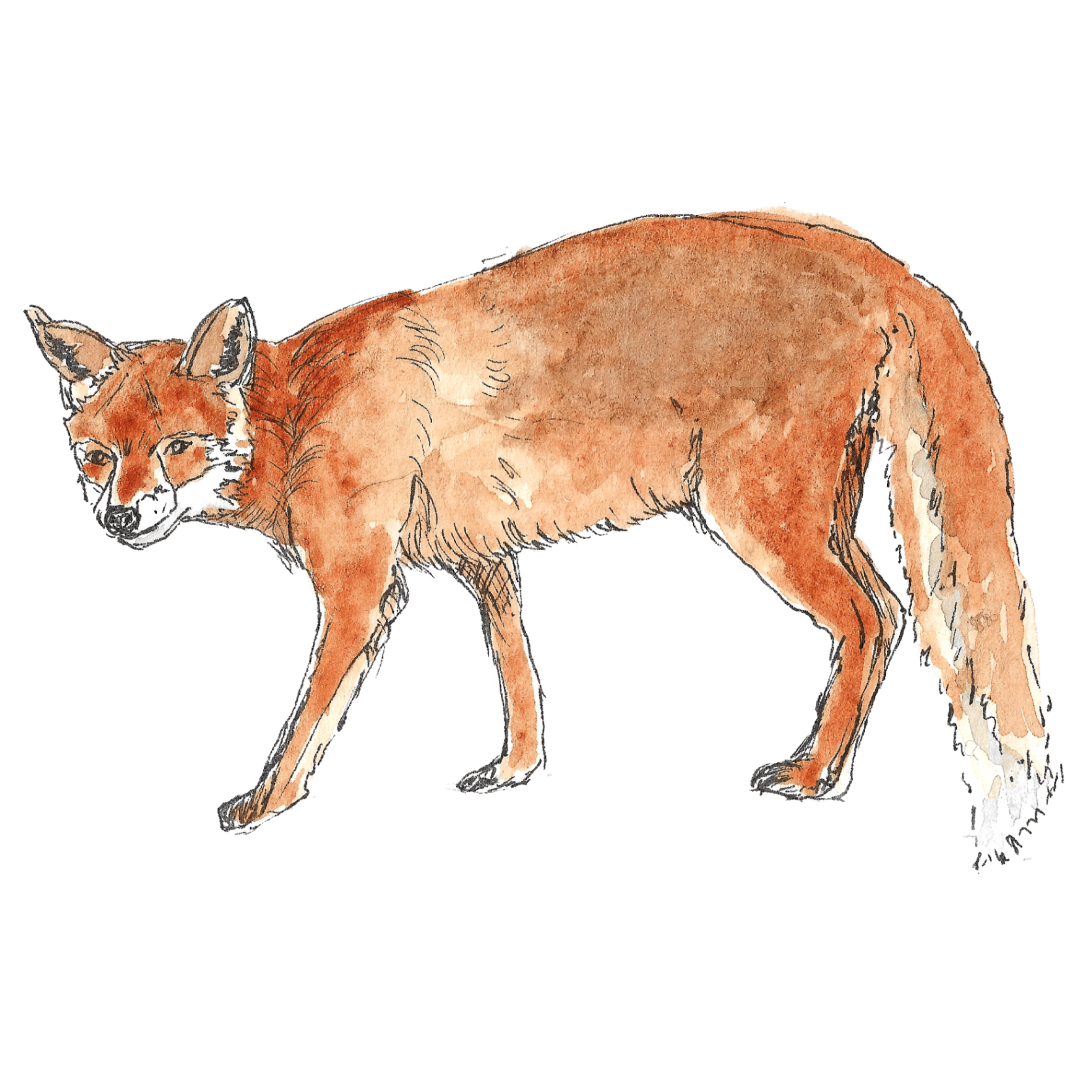
Watercolour illustration of a red fox walking forward

Mammals - Photo ID

Red Fox - photo identification

Britain's only wild dog - russet-orange above, white below, with a long bushy tail (the 'brush') usually tipped white. Foxes are adaptable opportunists, equally at home on moorland, farmland and in town gardens. Most active at dawn and dusk, but increasingly seen in daylight where they are left alone.

Photographs by Rob - taken in and around the North York Moors.

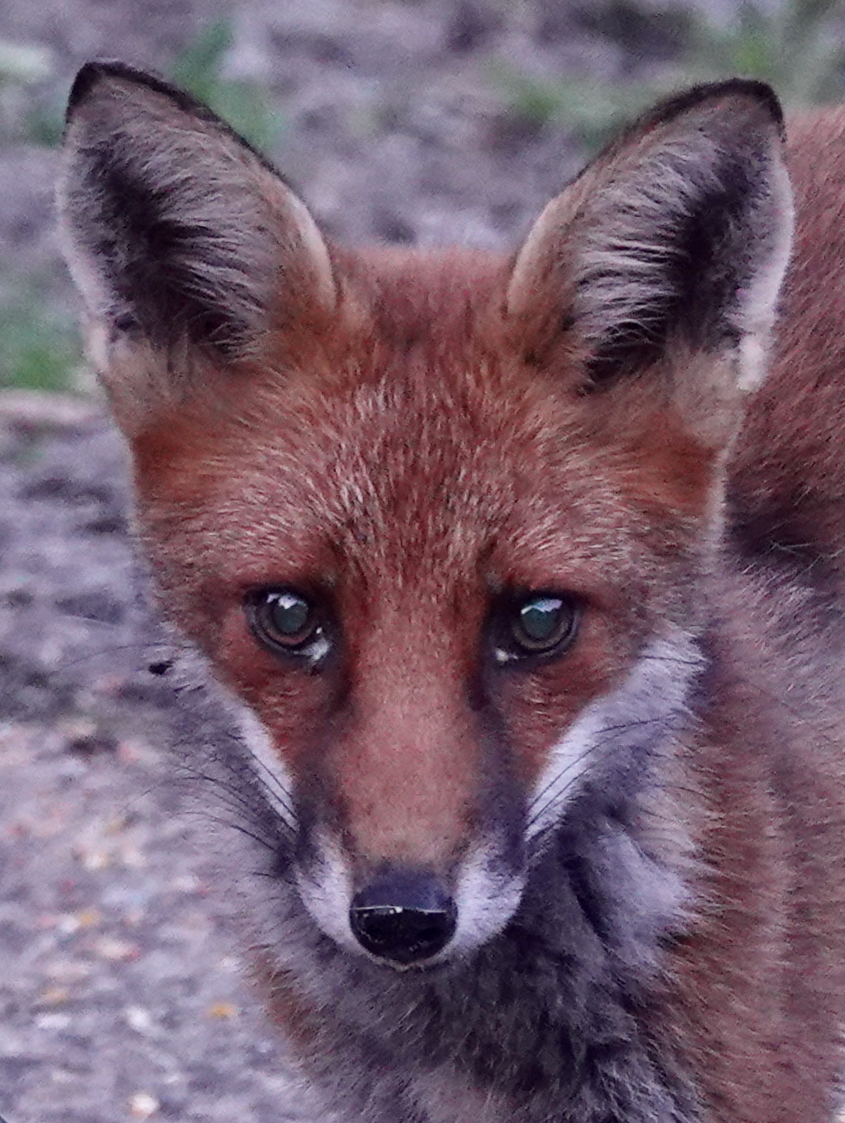
A close-up portrait of an adult red fox

Adult - those amber eyes are unmistakable

An adult fox has acute hearing and can pinpoint a mouse beneath snow or grass from several metres away. The white cheek and chin contrast with the rich rusty crown - the classic countryside fox face.

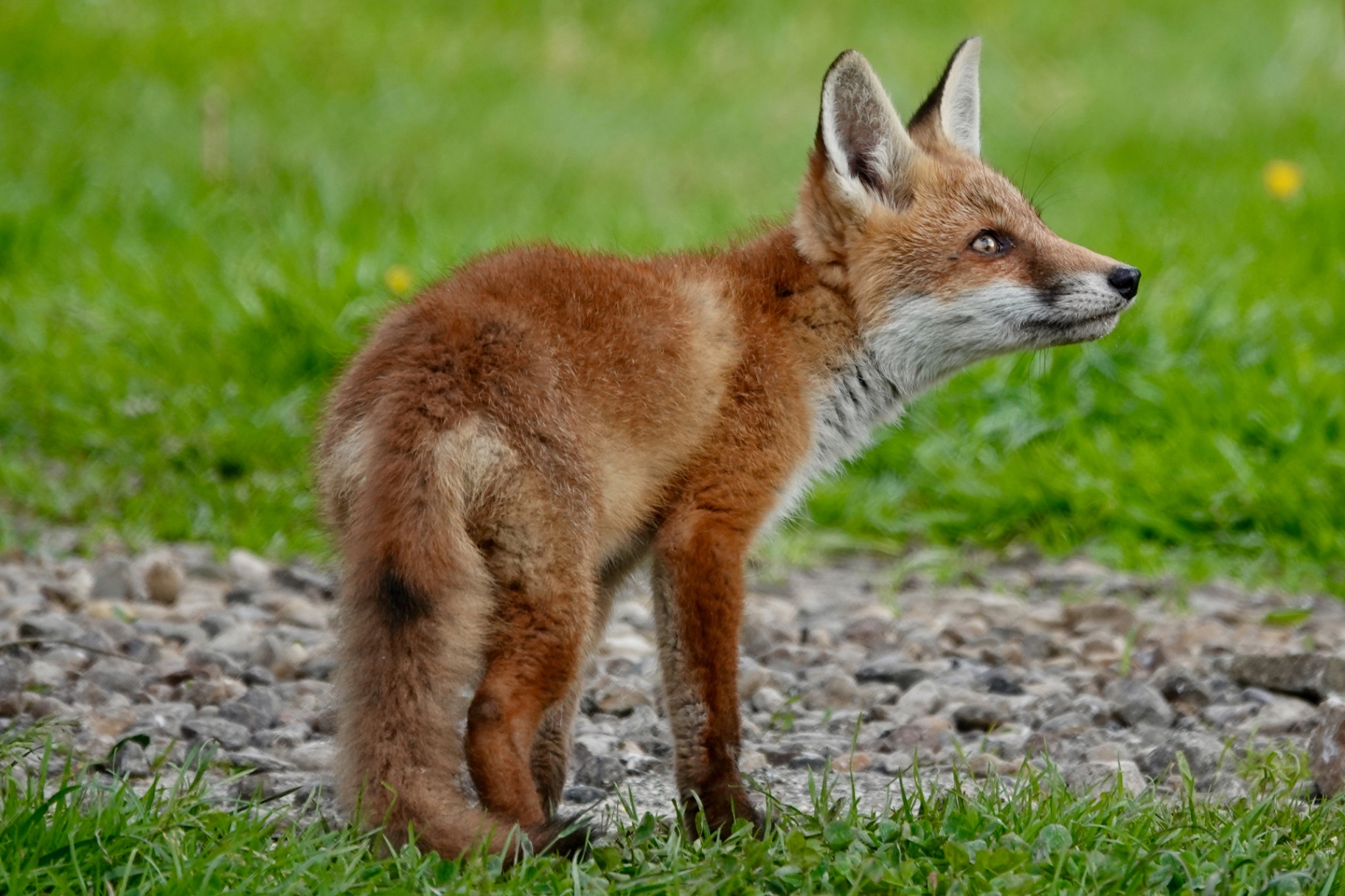
A young fox cub standing on a gravel path beside grass

Cub - born underground constructed-lair in spring

Cubs are born in March or April in an underground constructed-lair earth, deaf and blind. By June they are above ground, play-fighting outside the den and gradually being weaned. By autumn they will disperse to find their own territory.

How it fits into North Yorkshire wildlife

Red foxes move easily between farmland, moorland edge, woodland and village margins across North Yorkshire. Their success comes from flexibility - they can hunt, scavenge and slip through many different habitats as long as there is cover and enough food.

How it interacts with the wider landscape

Foxes help control rabbits, voles and other small mammals, while also clearing carrion that might otherwise linger in the landscape. They are part hunter, part recycler, and their presence shows how connected the local food web really is.

Seasonal rhythm

They are easiest to imagine at dawn, dusk and through quiet night hours. Spring brings cubs, summer widens their ranging, and winter often reveals clearer tracks and movement along field edges.

Where to look and what to notice

Look for neat prints on muddy paths, droppings left on tracks, and quick reddish movement near hedgerows, rough grass or the edges of gardens and farmland.