
Back to the illustration

Wildlife - Insects

Bumblebees

The UK has 24 species of bumblebee - among the most important pollinators of wildflowers and food crops.

Species description adapted from RSPB and BTO references - see links below.

Status: Several species critically endangeredNorth Yorkshire species profileGo to Wildlife Identification
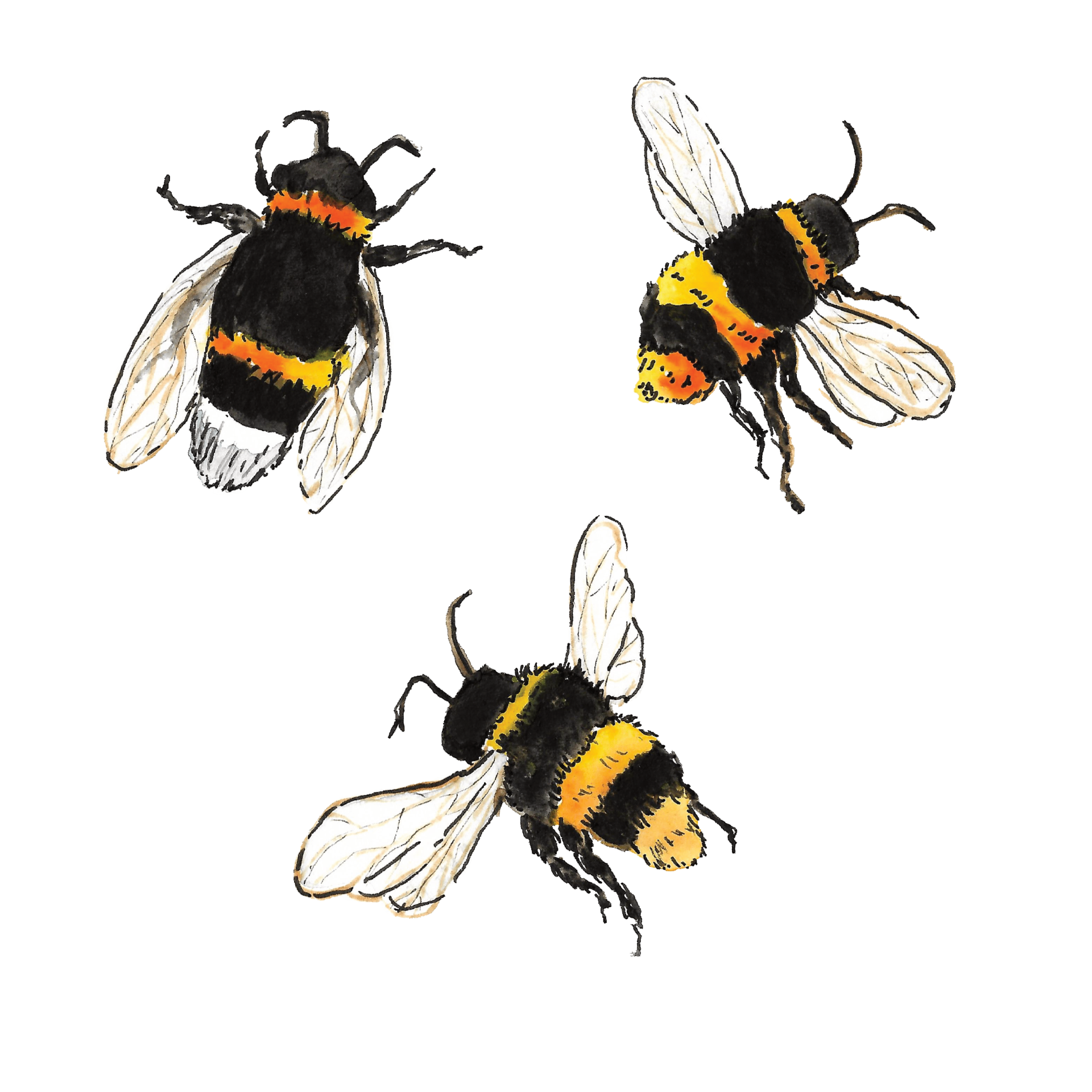
Watercolour illustration of three bumblebees in flight

Insects - Photo ID

Bumblebees - photo identification

Furry, gentle and unmistakable, bumblebees are among the UK's most important pollinators. The UK has around 24 species - look for the bands of black, yellow and white (or sometimes orange and red) across the thorax and abdomen, and the pale or coloured 'tail'. They are active from early spring through to autumn, working flowers from dawn until dusk.

Photographs by Rob - taken in and around the North York Moors.

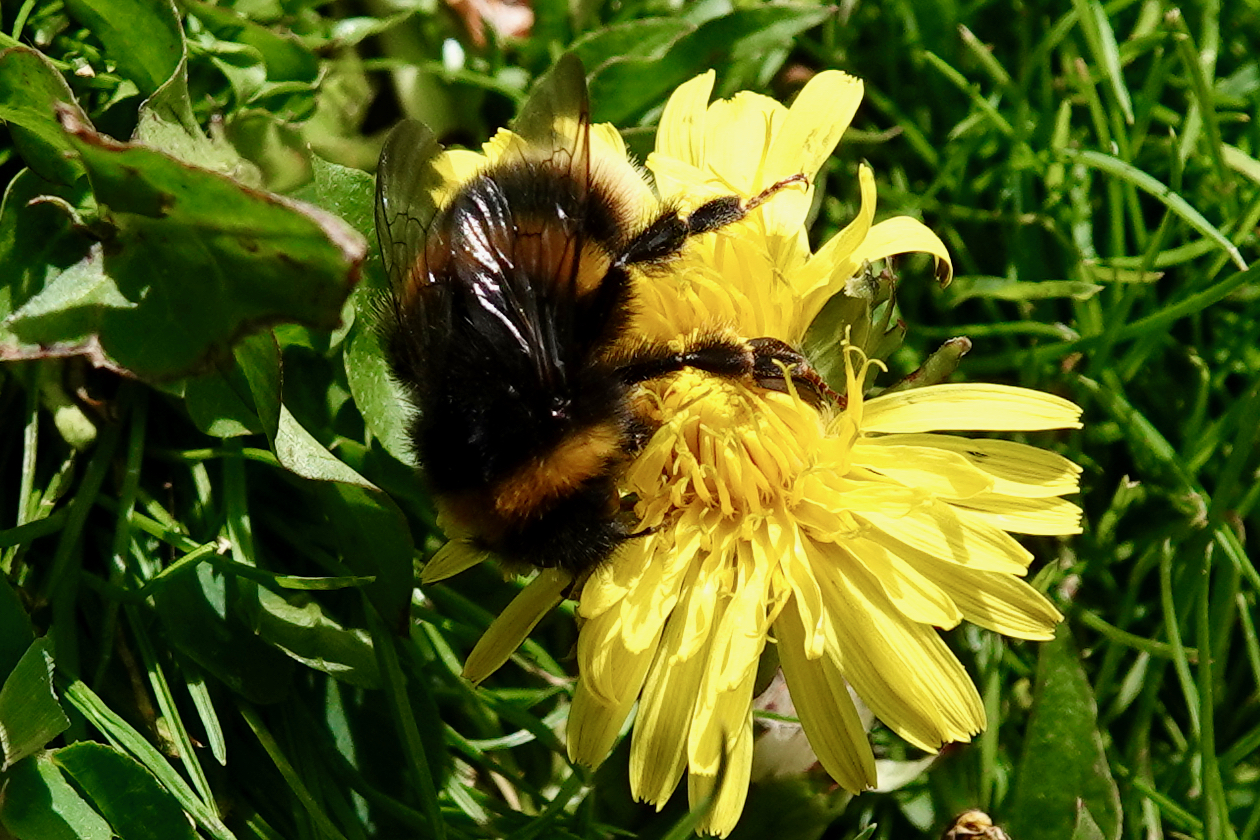
A buff-tailed bumblebee feeding on a yellow dandelion flower

Buff-tailed bumblebee on a dandelion - one of the earliest spring food sources

Dandelions are far more than a 'lawn weed' - they are a critical early-season nectar source for queen bumblebees emerging from hibernation. Leaving dandelions to flower in March and April can be the difference between a queen successfully founding a colony or starving.

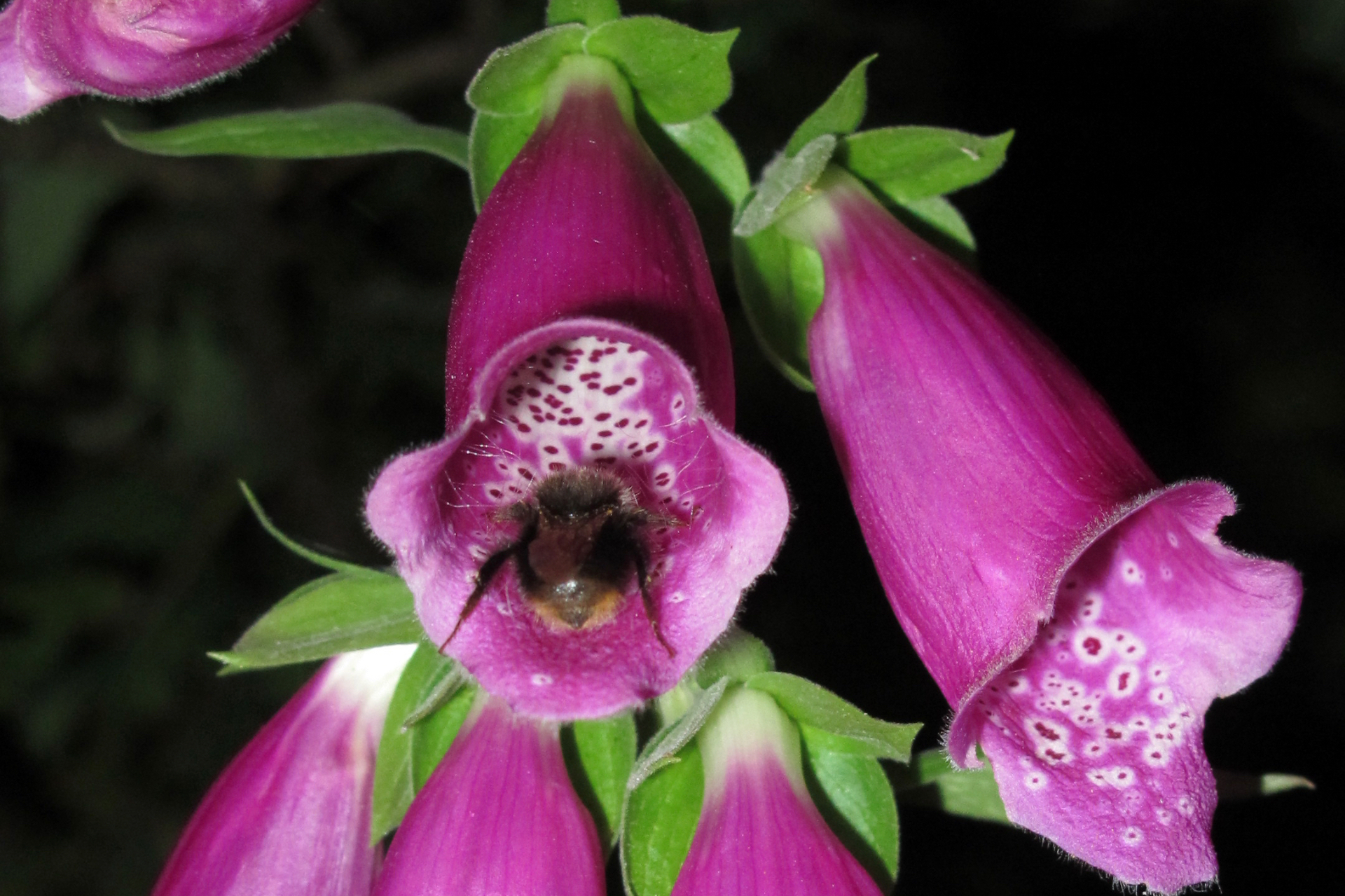
A bumblebee disappearing head-first into a pink foxglove bell

Foxgloves are designed for bumblebees

Foxgloves and bumblebees evolved together. The tubular flowers are the perfect size for a bumblebee to crawl right inside, and the dark spots on the lower lip act as runway lights guiding her to the nectar.

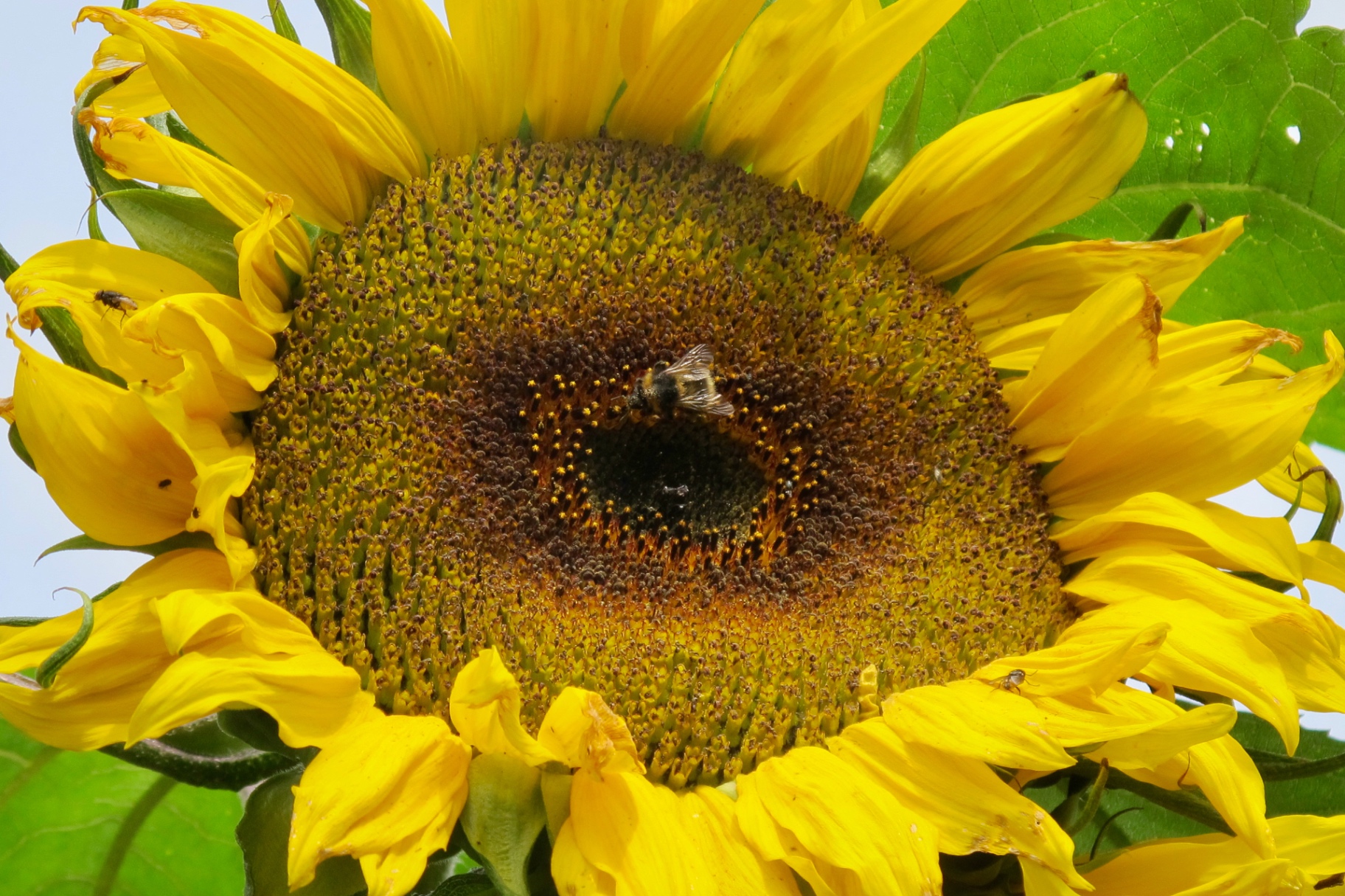
A bumblebee on the seed disc of a large sunflower

Late-summer fuel on a sunflower head

A single sunflower head is hundreds of tiny flowers (florets) packed together, each offering a small amount of nectar and pollen. Bumblebees work methodically around the disc.

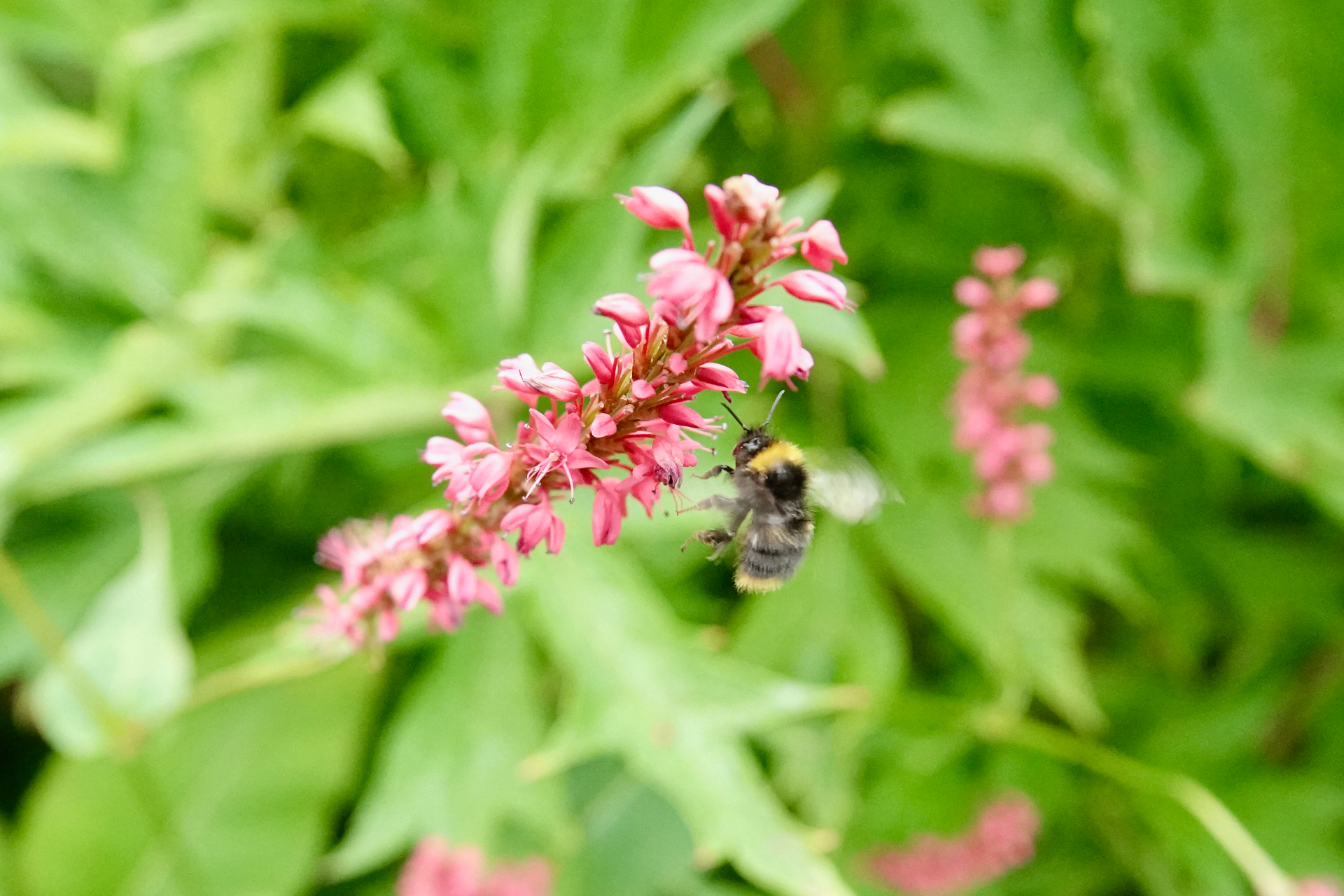
A white-tailed bumblebee in flight beside pink persicaria flowers

In flight - wings beating around 200 times per second

Bumblebees can fly in cooler, wetter weather than honeybees, which is why they are so important in upland places like North Yorkshire.

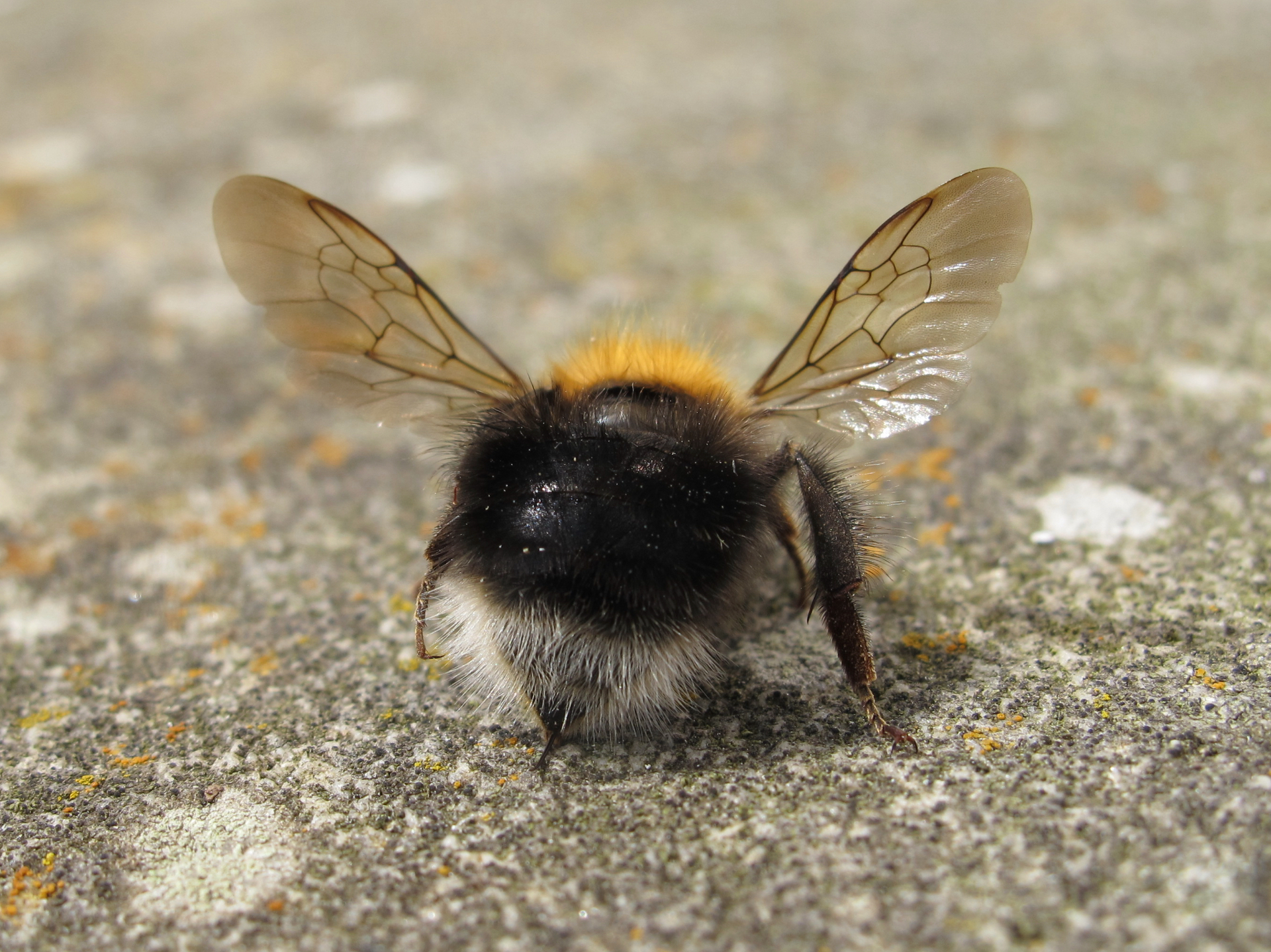
A close-up of a bumblebee resting on a stone surface

Resting on warm stone - bees need to warm up before they can fly

Bumblebees are cold-blooded but can 'shiver' their flight muscles to warm up before take-off. A teaspoon of sugar-water (one part sugar to two parts water) can revive an exhausted bee in spring.

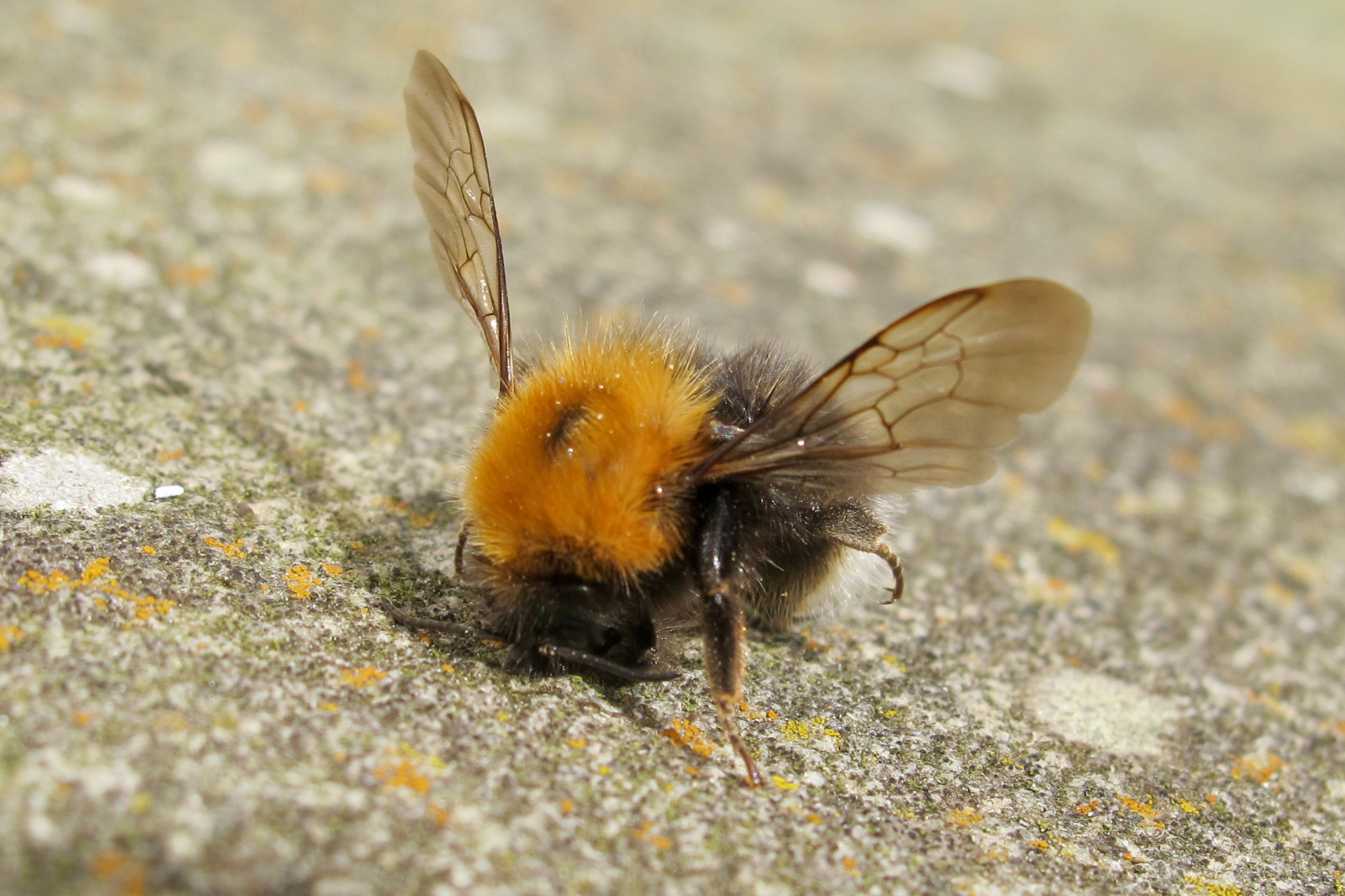
A tree bumblebee with a ginger thorax, black abdomen and white tail resting on lichen-covered stone

Tree Bumblebee (Bombus hypnorum) - ginger thorax, black abdomen, white tail

The Tree Bumblebee is a relative newcomer, first recorded in the UK in 2001 and now widespread. It's easy to identify: a bright ginger-brown thorax, a black abdomen, and a crisp white tail. As the name suggests, it likes to nest above ground - often in bird boxes, roof cavities and hollow trees - so leaving old nest boxes up over summer can give a colony a home.

How it fits into North Yorkshire wildlife

Bumblebees help power North Yorkshire's living landscape. They move between moorland edge flowers, hedgerow blossoms, kitchen gardens, meadows and roadside verges, carrying pollen that keeps wild plants and crops reproducing.

How it interacts with the wider landscape

Without bumblebees, many flowers would set less seed and many insects, birds and mammals would feel the loss further down the chain. Their work supports berries, clover, orchard blossom and the rich patchwork that other species depend on.

Seasonal rhythm

Queens appear in early spring, workers fill the warmer months, and late summer flowers are vital fuel before new queens find shelter for winter.

Where to look and what to notice

Look for them on foxgloves, clover, comfrey, thistles and garden flowers. The more varied the bloom through the year, the better the chances of seeing several species.