
Back to the illustration

Wildlife - Birds

Barn Owl

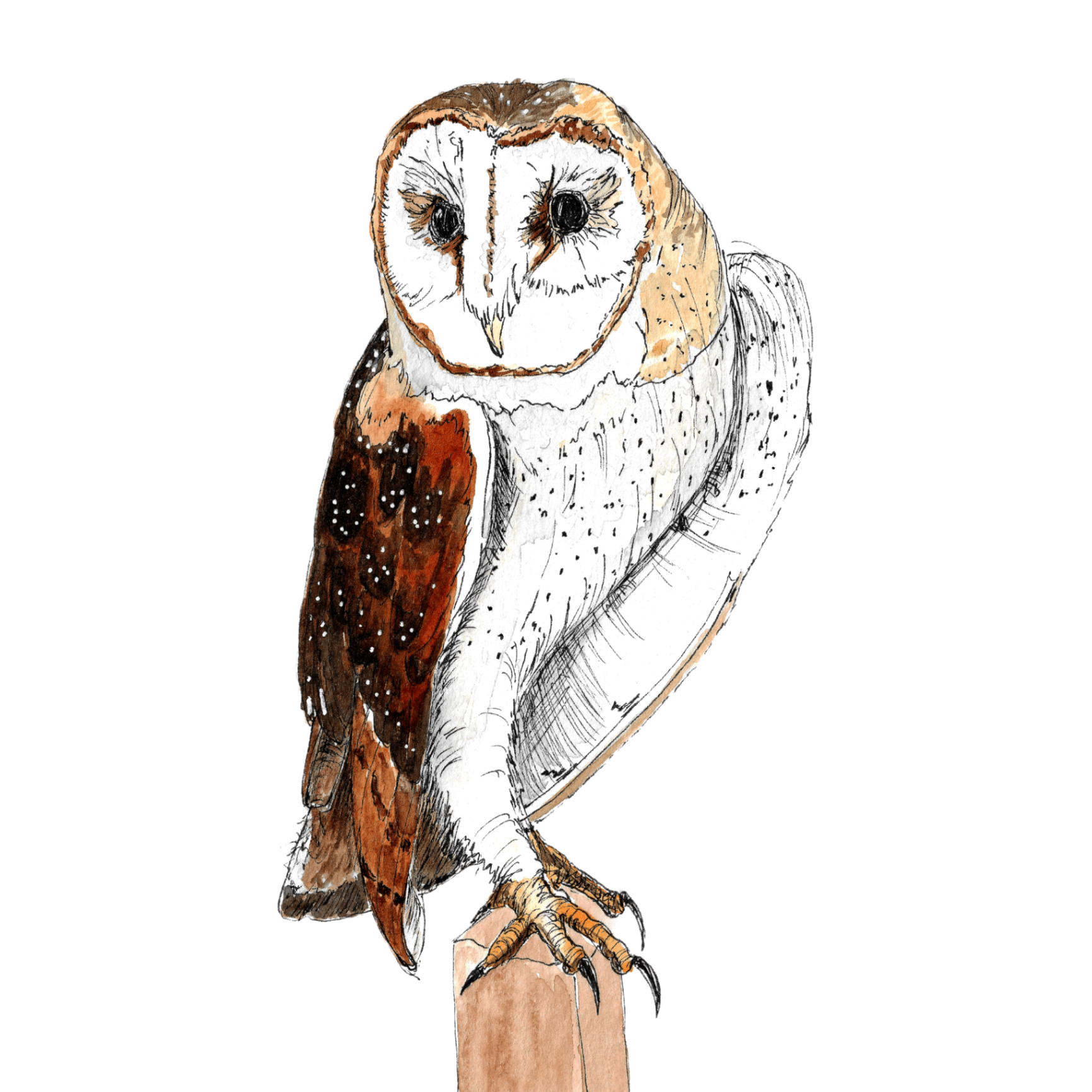
The barn owl is one of Britain's most beautiful birds - silent in flight, with a ghostly white heart-shaped face. It hunts voles and mice along field edges, hedgerows, and riverbanks.

Species description adapted from RSPB and BTO references - see links below.

Status: Amber (declining)North Yorkshire species profileGo to Wildlife Identification
Watercolour illustration of a barn owl perched on a post

Birds - Photo ID

Barn Owl - photo identification

The ghostly white 'farmer's friend' - a silent, low-flying hunter of rough grassland, field margins and quiet hedgerows. Barn Owls hunt mainly at dawn and dusk, listening for the rustle of voles below with one of the most sensitive sets of ears in the animal kingdom.

Photographs by Rob - taken in and around the North York Moors.

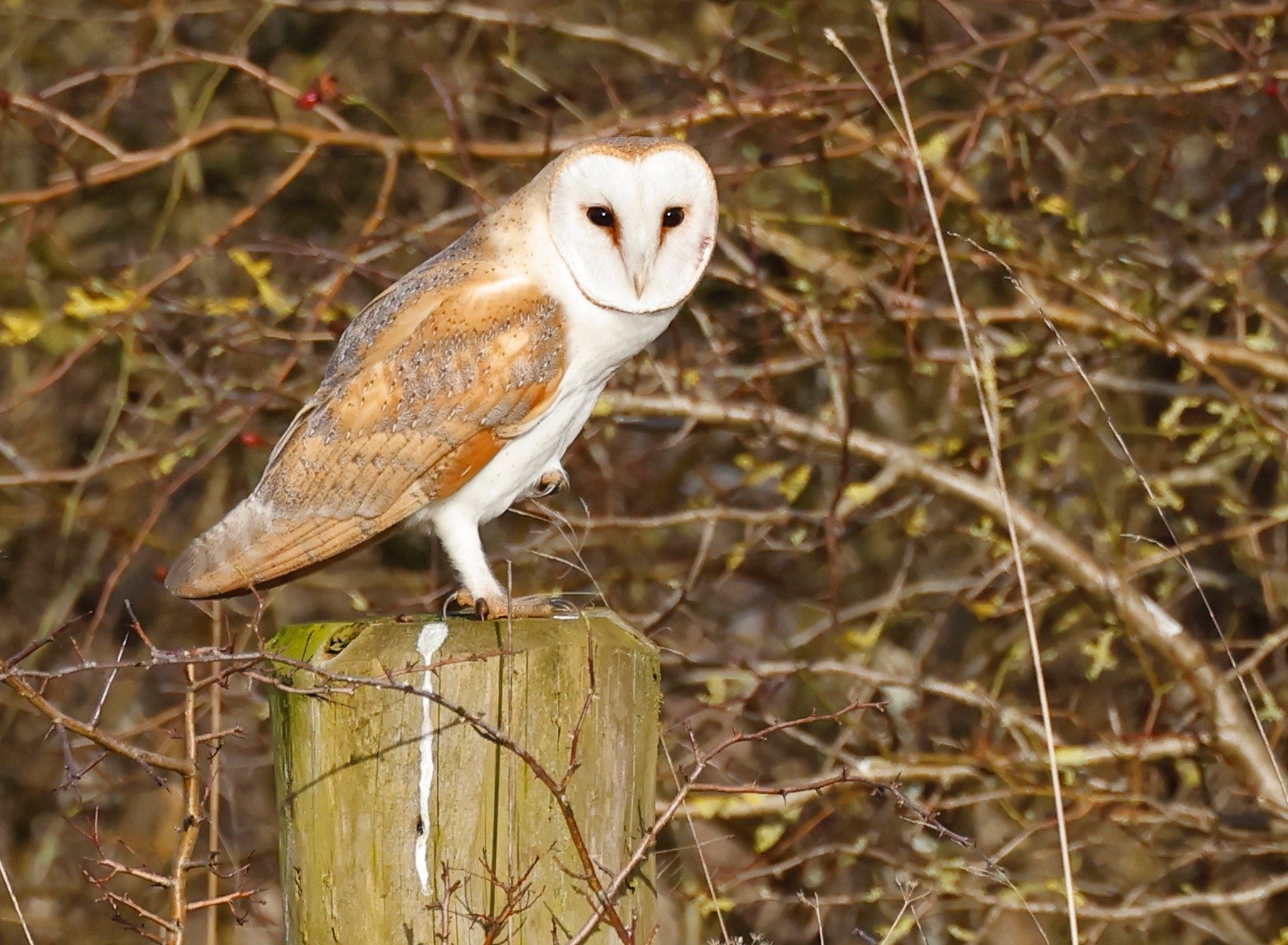
A Barn Owl perched on top of a wooden fence post in front of a bramble hedge

Barn Owl on a fence post

A perfect view of a Barn Owl hunting along a hedgerow at dusk. The heart-shaped white face is not just for show - it works like a satellite dish, funnelling tiny sounds towards asymmetrically placed ears so the owl can pinpoint a vole moving in long grass without ever seeing it. Note the warm buff-orange back and wings, the pure white underparts and the long feathered legs trailing below the perch. Barn Owls need rough, ungrazed grassland to hunt and quiet old buildings or specially designed nest boxes to breed - both are in short supply, which is why putting up Barn Owl boxes on suitable land can make a real difference.

Photo: Richard Baines

How it fits into North Yorkshire wildlife

Barn owls belong to the softer edges of the North Yorkshire landscape: rough grass margins, meadow strips, field corners, old farm buildings and quiet valleys. They need open hunting ground close to safe nesting and roosting spaces, so their presence often signals a countryside that still has room for both farming and wildlife.

How it interacts with the wider landscape

Their lives are closely tied to voles, mice and other small mammals. When rough grassland is healthy, prey numbers rise and barn owls can breed successfully. When field margins are lost or weather turns harsh, the whole balance shifts against them.

Seasonal rhythm

Barn owls can be active in every season, but calm evenings in spring and summer are when many people first notice them floating low over fields like pale lanterns.

Where to look and what to notice

Look for a low, buoyant flight over grassland, pellets beneath roosting spots, and quiet farm buildings near meadows and river corridors.