
Back to the illustration

Wildlife - Mammals

Badger

Powerfully built, with a distinctive black-and-white striped face. Badgers live in extensive underground sett systems and are largely nocturnal.

Species description adapted from RSPB and BTO references - see links below.

Status: Protected (Protection of Badgers Act 1992)North Yorkshire species profileGo to Wildlife Identification
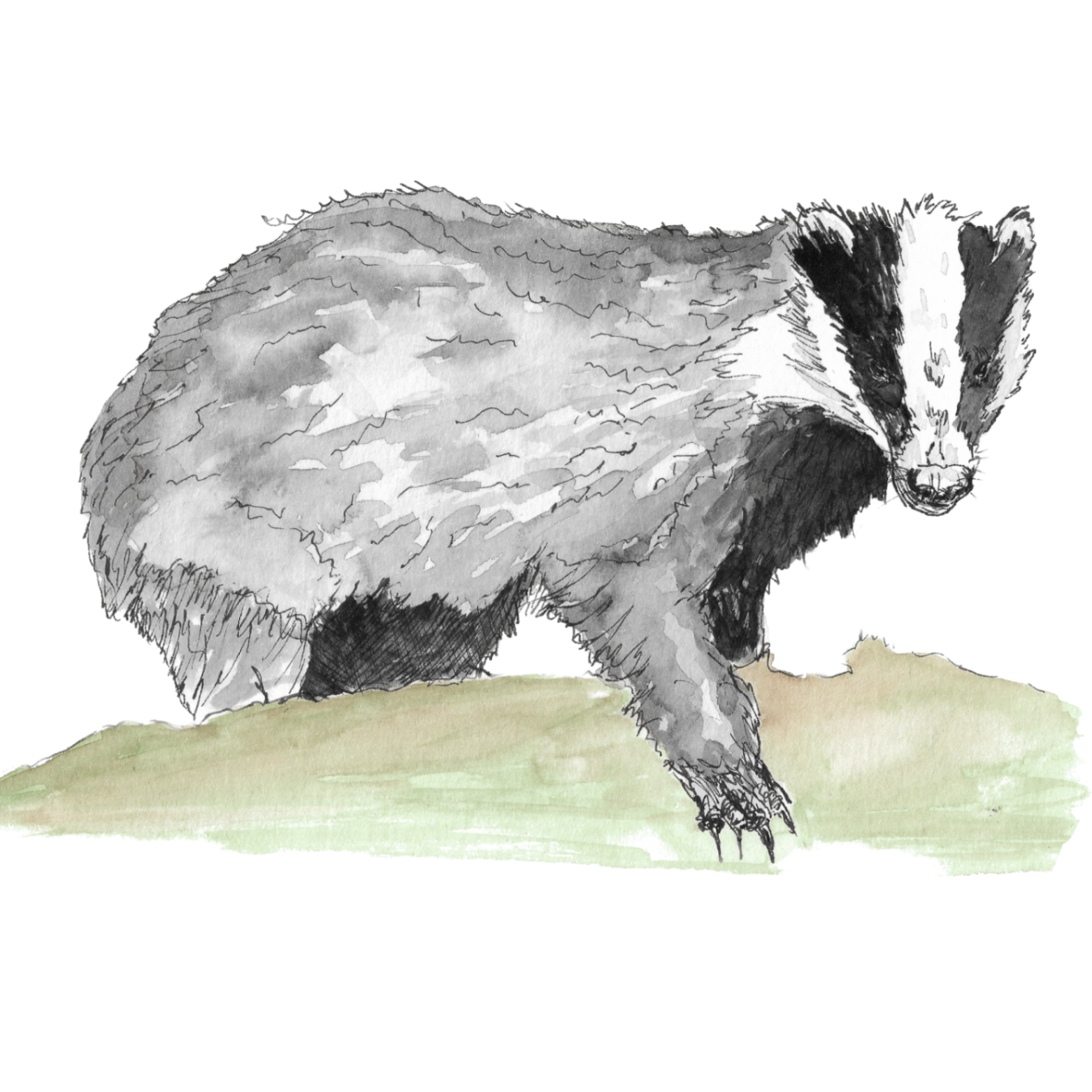
Watercolour illustration of a badger walking across grass

Mammals - Photo ID

Badger - photo identification

The Badger is one of Britain's most iconic mammals - a powerfully built, low-slung member of the weasel family with an unmistakable black-and-white striped face, silvery-grey back and short black legs. Highly social, they live in family groups called clans in extensive underground burrow systems (setts) and emerge at dusk to forage for earthworms, beetles, fruit, cereals and small mammals.

Photographs by Rob - taken in and around the North York Moors.

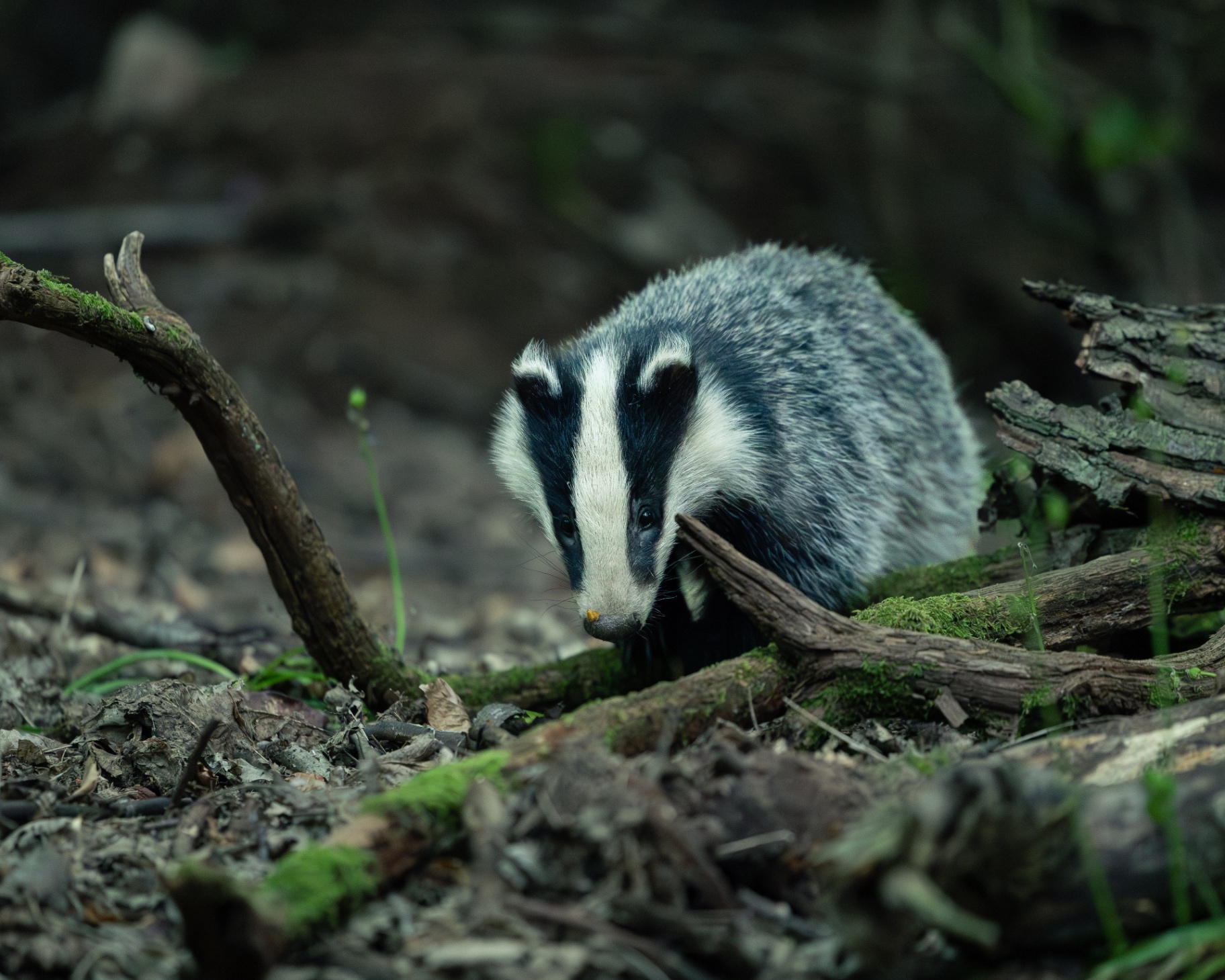
A Badger picking its way through mossy fallen branches and leaf litter on a woodland floor

Foraging through the woodland leaf litter

Badgers are true omnivores but earthworms are their staple - an adult can eat several hundred in a single night, hoovering them up from soft ground after rain. As they snuffle through leaf litter and turn over soil they also take beetles, slugs, fallen fruit, cereals, small mammals and even wasp grubs dug straight out of nests. Note the classic silhouette: a low, powerful body designed for digging, short black legs, and the unmistakable black-and-white striped face.

Photo: Phil Loveday (@badgermanandrobin_)

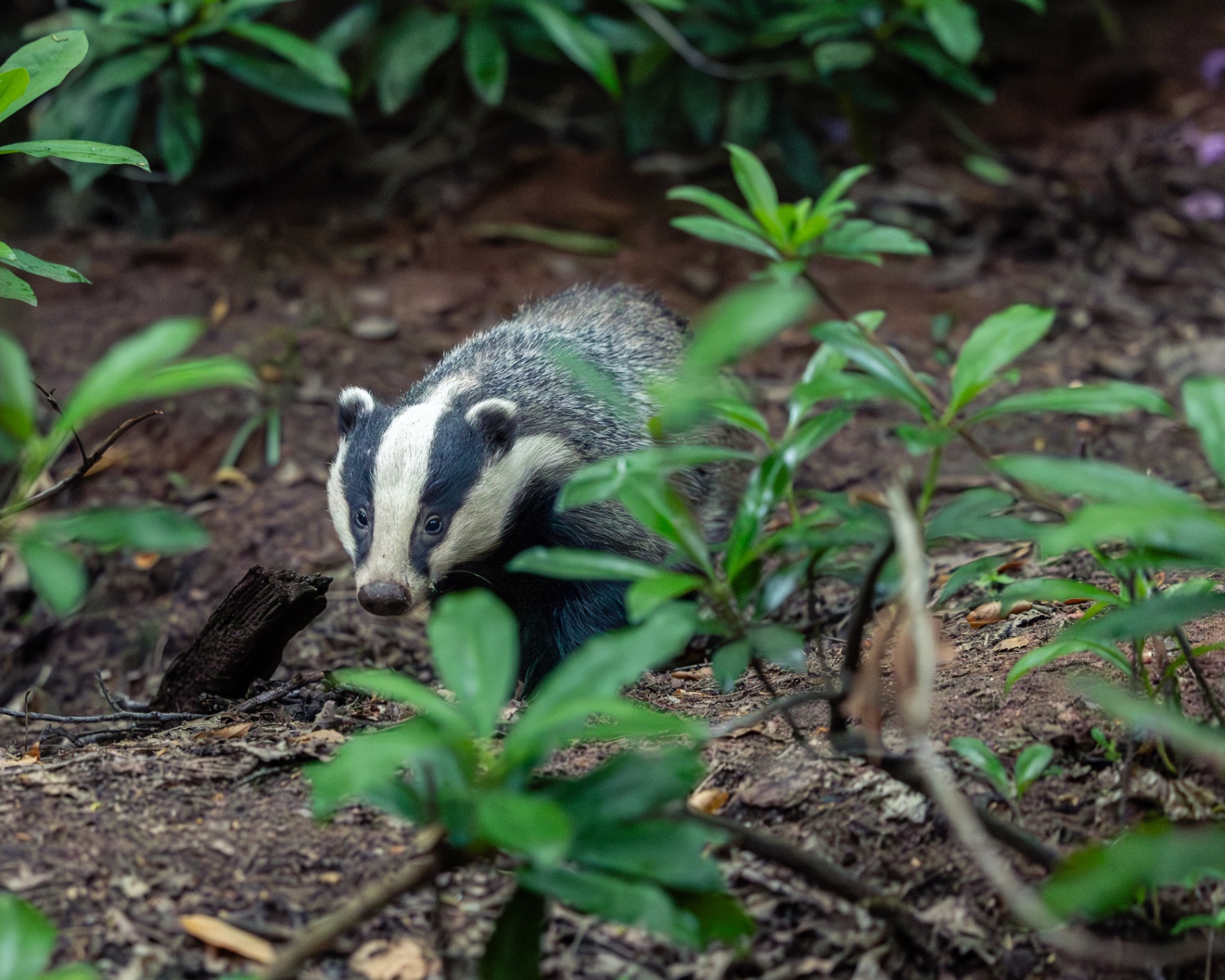
A Badger emerging from beneath rhododendron leaves with dark eyes catching the light

Emerging into the evening

Badgers are mainly nocturnal, emerging from the sett around dusk and returning before dawn. Their eyesight is poor, but their sense of smell is extraordinary - they can detect earthworms deep beneath the soil and follow scent trails left by other badgers along well-worn paths. The bold black-and-white face pattern is thought to warn predators that badgers are formidable opponents when cornered.

Photo: Phil Loveday (@badgermanandrobin_)

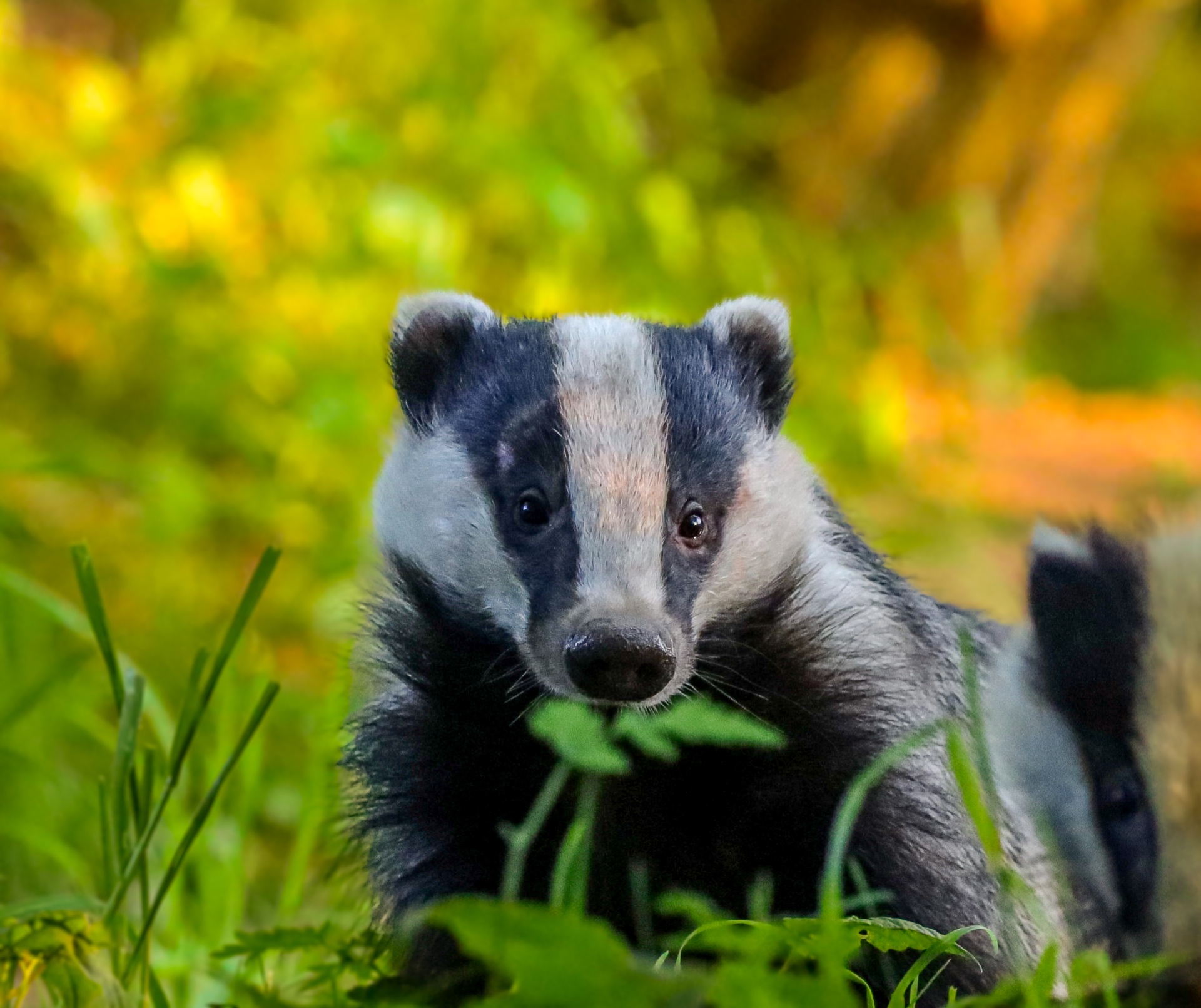
A close-up head-and-shoulders portrait of a Badger in evening light with golden autumn foliage behind

Portrait in the last of the light

A rare chance to see the face properly - two thick black stripes running from the muzzle back over the ears, split by a broad white centre and framed with silver-grey guard hairs on the crown. The small dark eyes are set within the black stripes, which some scientists think helps disguise where the animal is looking. Golden late-summer light in the background hints at the time of day badger-watchers know best - the magical hour just after sunset.

Photo: Phil Loveday (@badgermanandrobin_)

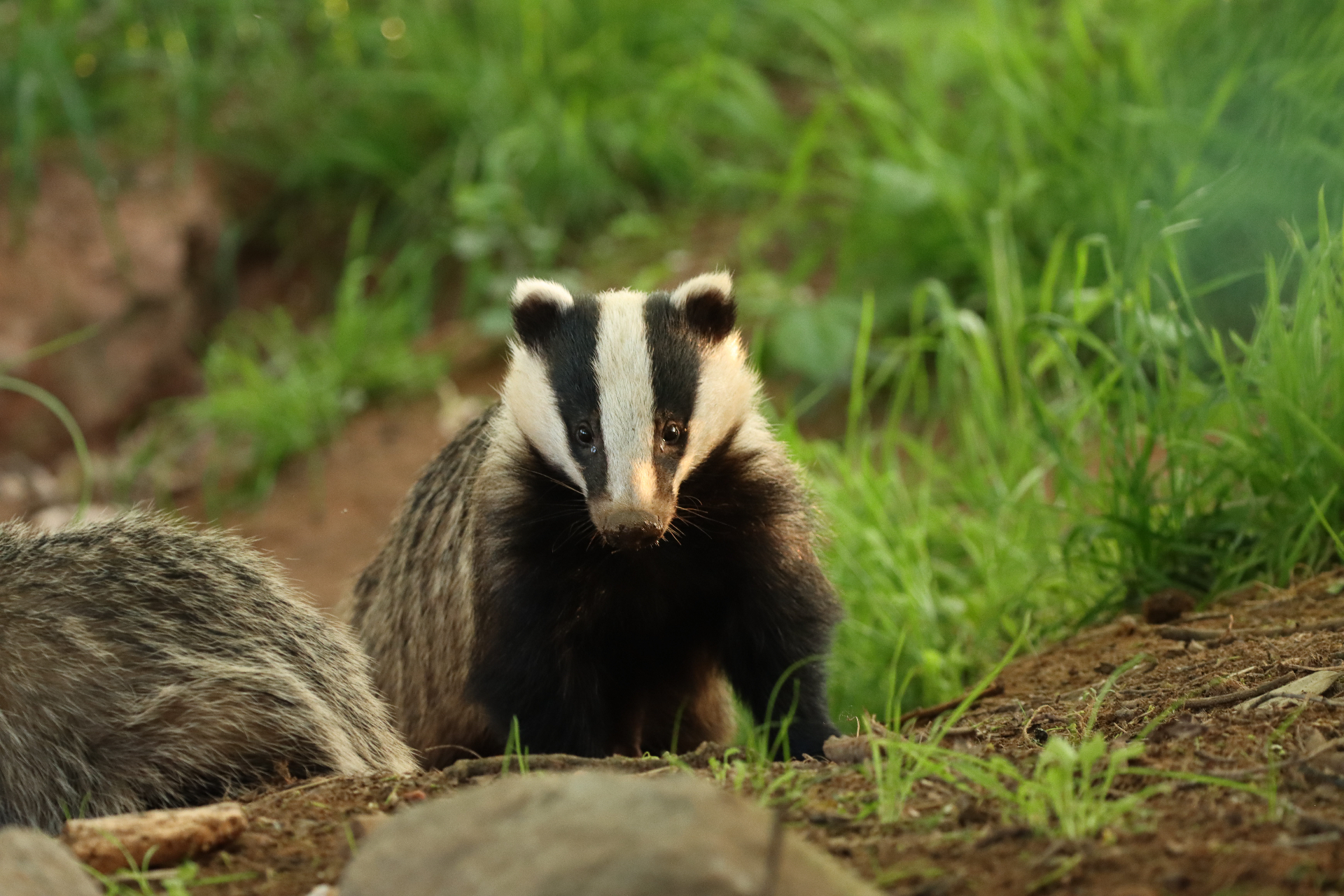
Two Badgers together at the entrance to a sett on a grassy bank, one facing the camera and one turned away

Family at the sett entrance

Badgers are highly social and live in extended family groups called clans, typically of four to eight animals, sharing a network of tunnels and chambers that can be centuries old. Setts are passed down through generations and constantly extended, with separate chambers for sleeping (lined with fresh bedding of grass, moss and leaves) and for latrines dug well away from the living quarters. Seeing two together like this usually means a peaceful moment of grooming or mutual sniffing that reinforces the family bond.

Photo: Phil Loveday (@badgermanandrobin_)

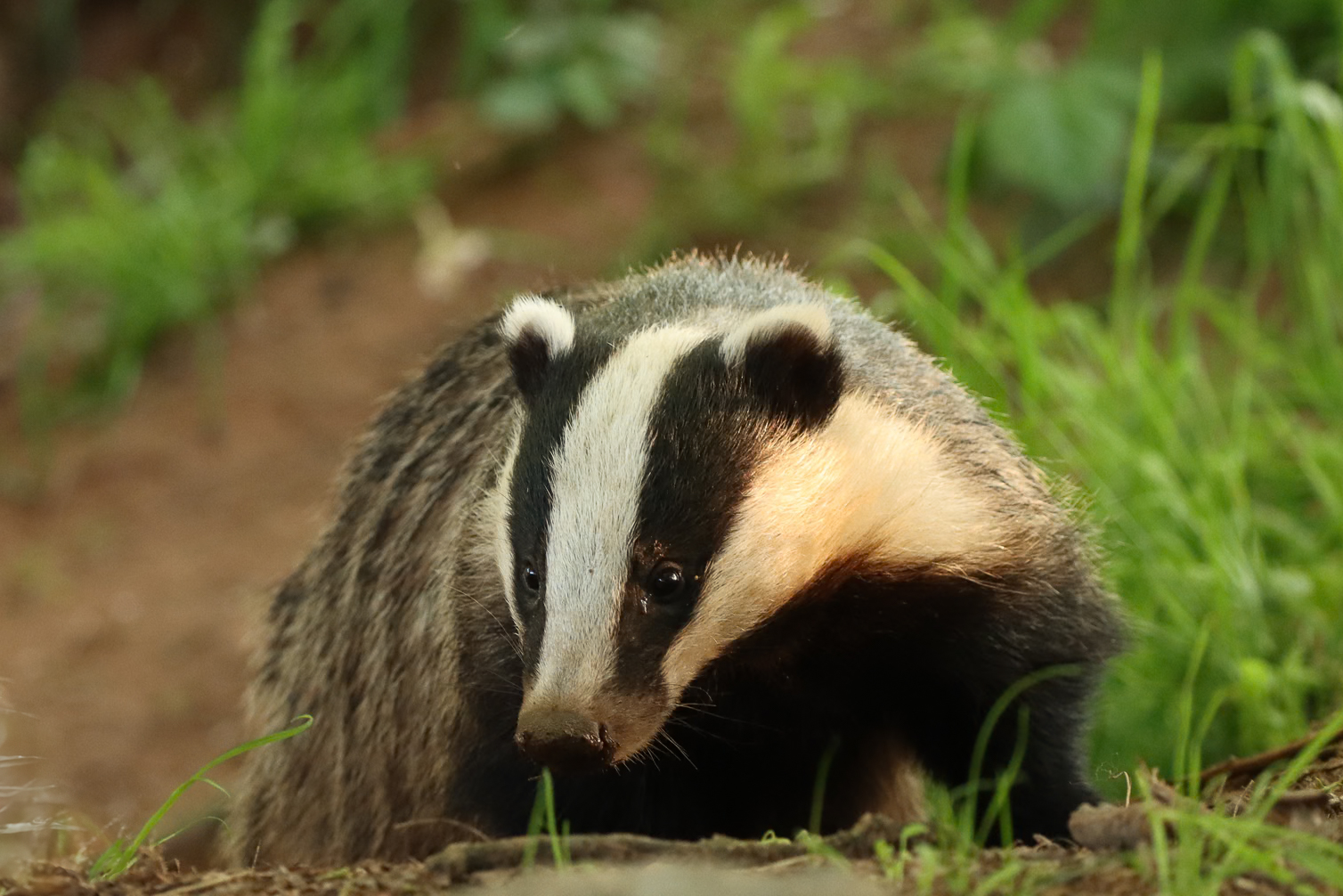
A close-up frontal portrait of a Badger with strong side-lighting picking out the face stripes and silver guard hairs

Face to face - the classic Badger stripes

The perfect view of the pattern that makes a Badger unmistakable. Note also the pale muzzle stained with soil from foraging, and the powerful shoulders that hint at the digging strength these animals possess - they can excavate several metres of tunnel in a single night. Badgers are a legally protected species in the UK: it is an offence to disturb a sett or harm a badger, and any conservation work near known setts requires a licence.

Photo: Phil Loveday (@badgermanandrobin_)

How it fits into North Yorkshire wildlife

Badgers are one of Britain's most iconic and best-loved mammals, and a familiar part of the hidden night-time life of North Yorkshire. They live in close-knit family groups called clans, sharing underground homes known as setts that can be used by generations of badgers and sometimes stay in continuous occupation for over a hundred years. Setts often sit in woodland edges, old banks and scrubby corners where tree roots hold the soil together, and from there clans range out through hedgerows, pasture and rough ground, stitching different habitats together.

How it interacts with the wider landscape

Badgers are true omnivores: earthworms make up the bulk of their diet (an adult can eat several hundred in a single night), but they also take beetles, slugs, fallen fruit, cereals, small mammals and even wasp grubs dug out of nests. As they snuffle and dig they turn over soil, scatter seeds and create tunnels and spoil heaps that foxes, rabbits, small mammals and invertebrates later use - so one badger clan quietly shapes a much wider patch of countryside.

Seasonal rhythm

Badgers are active all year and do not truly hibernate, though they spend more time below ground in the coldest weeks. Cubs are usually born underground in late winter and emerge above ground in spring; warm, damp evenings in spring and autumn are when earthworms and insects are most plentiful and badgers are easiest to imagine working through the landscape.

Where to look and what to notice

Badgers are strictly protected in law under the Protection of Badgers Act 1992 - it is an offence to harm them or to interfere with their setts. Look (and listen) for the signs rather than the animal: snuffle holes in soft ground, well-worn paths pushing under fences, coarse black-and-white hairs caught on barbed wire, and shallow latrine pits near sett entrances. In North Yorkshire they are nearly always sensed by their signs long before they are seen.